



Free written scope consultation - allowances, timeline, and change-order rules on paper before a single trade is scheduled
Styles & brands we work with
- Kitchen remodeling
- Bathroom remodeling
- Home additions & ADU
- Roofing
- Windows & doors
- Driveway & pavers
- Fence
See the difference
 Before
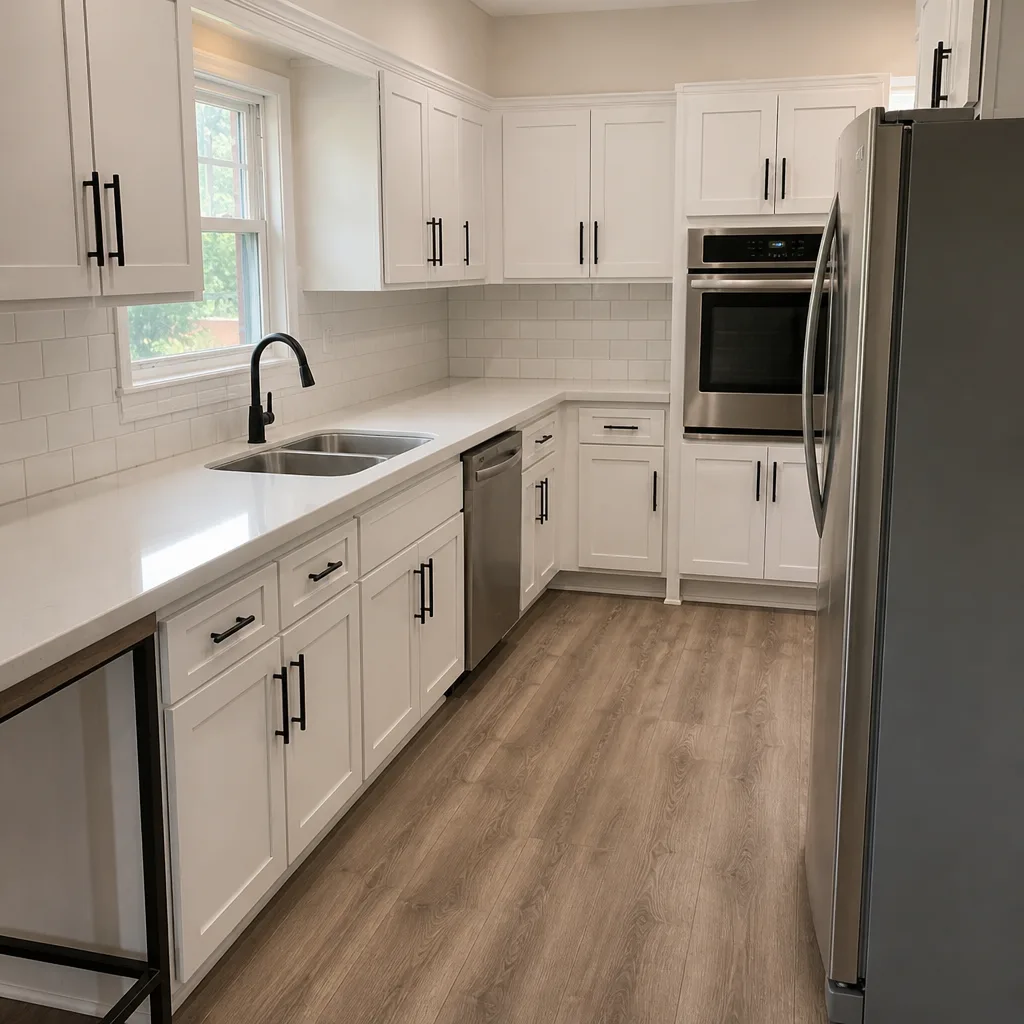 After
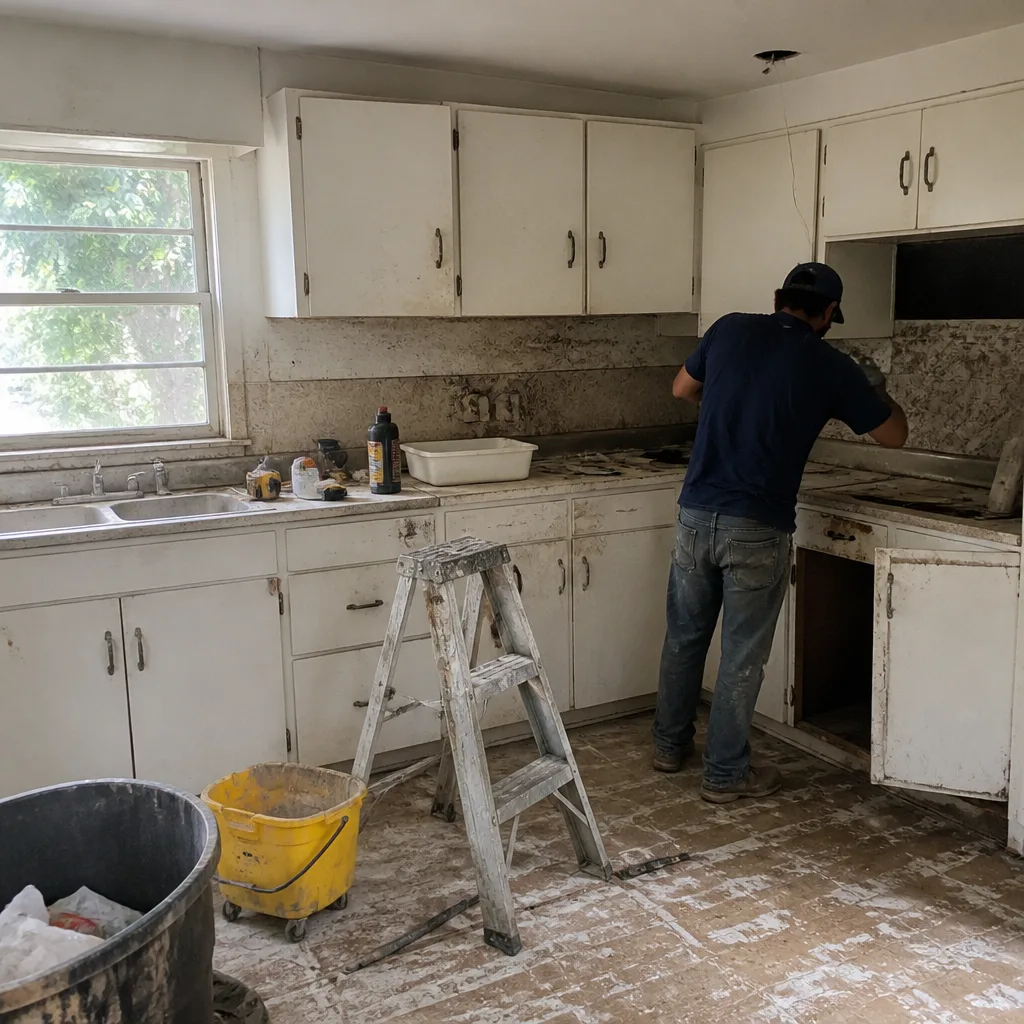 Before
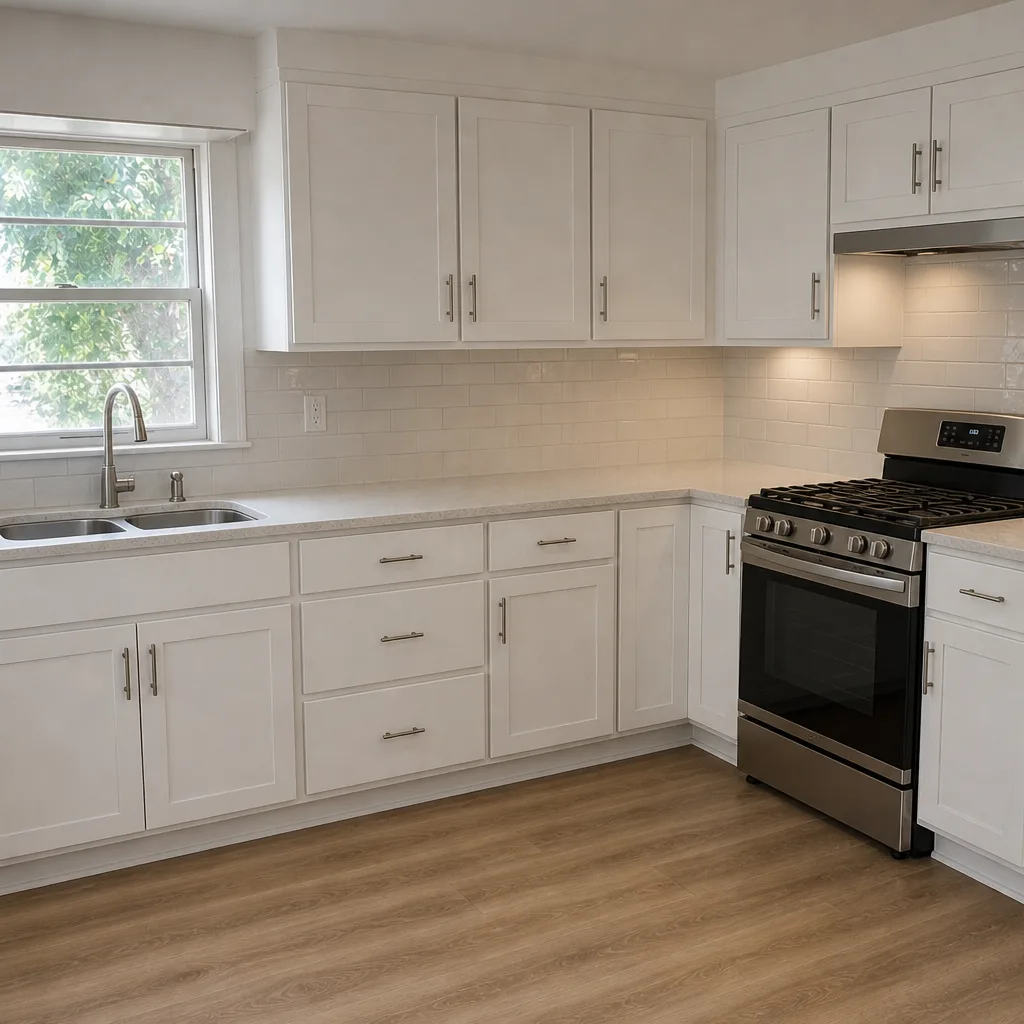 After
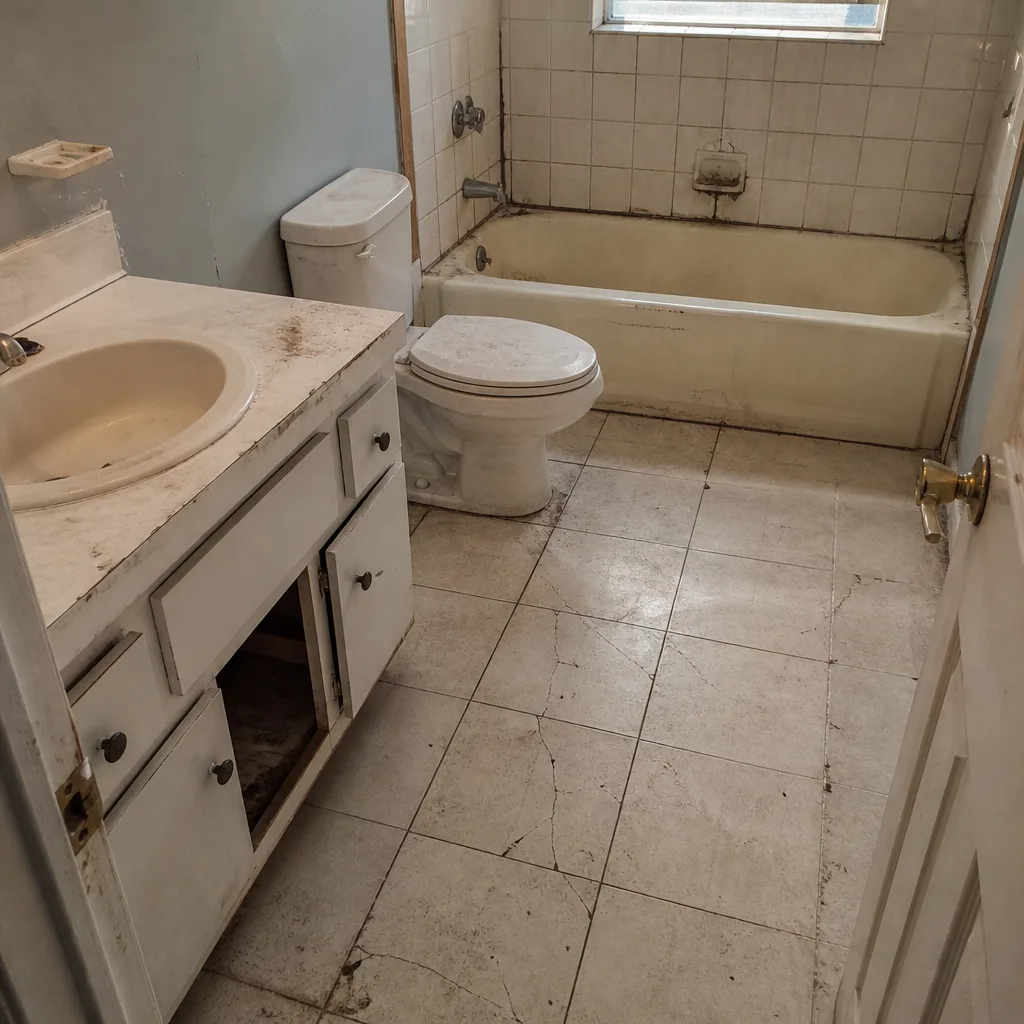 Before
 After
What Causes Roof Leaks in Westchester, FL? The Answer Isn’t the Shingles
Most new roof leaks in Westchester, FL are caused by flashing failures at penetrations, not by worn shingles. The single most common culprit we find is the AC curb flashing that was cut in when the original condenser was swapped out, installed without a Miami-Dade permit, and never brought up to the county’s wind-driven rain standard. Surface wear is real, but it ranks fourth or fifth on the list. If you’re chasing a stain that appeared after a storm and wondering where the water actually got in, call (833) 630-4214 and we’ll walk you through what to check before anyone gets on the roof.
The Real Rank of Leak Causes in Westchester’s Housing Stock
Generic roofing articles list missing shingles first because that’s what’s visible from the street. In Westchester, the roof is usually fine. The water is coming in at the edges of things. Here’s the order we actually see, ranked by how often a leak call traces back to it.
- 1. HVHZ flashing failures at penetrations. AC curbs, plumbing vents, exhaust caps, skylights. Every one of these is a hole in the roof, and every one needs a flashing detail built to the High-Velocity Hurricane Zone standard Miami-Dade enforces.
- 2. Parapet wall base flashing on flat-roof additions. Westchester has a long history of carport-to-room and rear-addition work on low-slope roofs, and the parapet base is where the membrane meets the wall. That joint moves, and it fails.
- 3. Eave separation during high-wind events. Wind gets under the edge, the fascia lifts slightly, and the next rain finds the gap.
- 4. Aged underlayment on tile roofs. The tile is a rain screen; the underlayment is the actual waterproof layer. Tile from the 1980s can look intact while the felt beneath it has been baking for decades.
- 5. Field membrane or shingle failure. Last on the list, and the one most homeowners assume came first.
That ranking matters because it changes where you look. A leak that shows up at an interior ceiling near a hallway closet usually traces to an AC platform penetration above it, not to the shingles twelve feet away.
Why Unpermitted Work Is Westchester’s Hidden Leak Source
Westchester is an unincorporated pocket of Miami-Dade County. There’s no city hall to pull a permit from, which means every roofing scope, addition, and mechanical change runs through county e-permitting and county inspectors. That single fact shapes the leak problem here.
When an AC unit gets replaced, the curb often gets rebuilt or re-flashed. On plenty of Westchester CBS homes from the 1960s through the 1980s, that work happened without a permit, which means no inspection, which means the flashing detail was left to whoever showed up that day. Same story with a skylight a previous owner added, or a carport converted to a bedroom. The work looks finished. The flashing underneath is whatever the installer knew, and if they didn’t know the HVHZ detail, the joint is a slow leak waiting for a serious rain.
Those leaks surface years later, long after the paperwork trail has gone cold, and they’re the reason a diagnosis has to start with “what was modified on this roof” rather than “how old is this roof.”
Wind-Driven Rain Doesn’t Behave Like Gravity
Here’s the part most explanations skip. A leak in light rain comes from gravity. Water lands, finds a low point, drips through. A leak during a South Florida storm comes from pressure.
Rain at highway-wind speeds hits a wall or a curb and gets driven sideways, which means water enters horizontal gaps and can travel upward against the normal drainage direction. A flashing lap that’s correct for gravity drainage can fail completely under that pressure. It’s the reason a roof that held for three dry seasons suddenly stains a ceiling after a tropical system, and the reason “it doesn’t leak in light rain” is not a diagnosis. It’s a countdown.
This is also why proper roofing in a hurricane zone is a documentation exercise as much as a carpentry one. Product approval under the county’s HVHZ rules exists precisely to confirm a given flashing or attachment detail has been tested against that pressure, not just against a garden hose.
Flat-Roof Drain Collars: The Leak Everyone Misdiagnoses
On Westchester’s low-slope roofs, the drain collar is a frequent failure point, and it gets mislabeled almost every time. The homeowner sees standing water, assumes a clog, clears the drain, and the leak stops when the rain stops. Problem solved, until the next storm.
What’s actually happening is that the collar flashing has separated from the deck membrane. Under normal flow, the drain carries water away and the break never sees pressure. When the drain is overwhelmed during a heavy summer rain, water backs up around the collar and finds the separation. Clearing the drain didn’t fix anything. It just removed the test condition.
Anyone evaluating a flat-roof leak needs to look at the collar-to-membrane joint as its own failure point, separate from the drain’s flow capacity.
What Repairs Actually Cost Here
Cost depends on which of the five causes above is at work, and flashing work is usually less than homeowners fear. These are the ranges we quote in Westchester, with upfront pricing so the number you see is the number you pay.
| Scope | Typical Westchester range |
|---|---|
| Roof repair (flashing, penetration, localized) | $400-$1,800 |
| Tile roof repair | $600-$2,500 |
| Full roof replacement | $8,000-$20,000 |
| Metal roof installation | $15,000-$40,000 |
A single failed AC curb flashing typically lands in the repair band. A roof with multiple compromised penetrations plus aged underlayment under tile often moves toward replacement math, since chasing leaks one at a time stops making financial sense. The honest answer depends on what’s actually under the surface, which is why the assessment comes before the number.
How We Remove the Root Cause Instead of the Symptom
Groundwork Construction Co. of Westchester handles roofing as a permit-fluent process. Every scope that touches a penetration or a flashing detail gets pulled through Miami-Dade County e-permitting and inspected, which means the detail is verified against HVHZ requirements rather than left to chance. If a future buyer’s inspector looks at that AC curb in five years, there’s a paper trail and a compliant installation behind it.
Material choice follows the same logic. GAF and Owens Corning roof systems are part of our curated lineup, matched to a low-slope or steep-slope assembly that suits Westchester’s concrete-block and stucco housing stock. Every project carries the 730-Day Done Right Promise: if it isn’t done right, we make it right. Calls are answered by a live person around the clock, technicians are background-checked and arrive in uniform, and financing at 0% for 18 months is available if a larger scope makes more sense than piecemeal repairs. Project estimates and design consults are free, with $1,000 off projects over $10,000.
Learn more about our Roofing work, or see the full range of what we handle from home and across the Westchester service area.
FAQs
Because wind-driven rain enters horizontal gaps and travels against normal drainage, so a flashing joint that sheds gravity-fed water fails under storm pressure. That pattern points to a flashing or penetration detail, not a hole in the field of the roof. Call (833) 630-4214 for an exact quote, and estimates are free.
Look at the ceiling nearest the air handler and the outdoor unit, then check whether the curb was ever permitted with Miami-Dade County. A stain that appears near an interior closet or hallway ceiling after storms is a common AC curb signature. Call (833) 630-4214 for an exact quote, and estimates are free.
Repair wins when the cause is isolated flashing, typically $400-$1,800, while replacement makes more sense when underlayment under tile has aged out or multiple penetrations have failed. The deciding factor is what’s under the surface, not roof age alone. Call (833) 630-4214 for an exact quote, and estimates are free.
Same-day assessment is often possible, and calls are answered by a live person around the clock, so you’re not waiting until Monday. Active leaks get priority. Call (833) 630-4214 for an exact quote, and estimates are free.
When to Stop Guessing and Have It Looked At
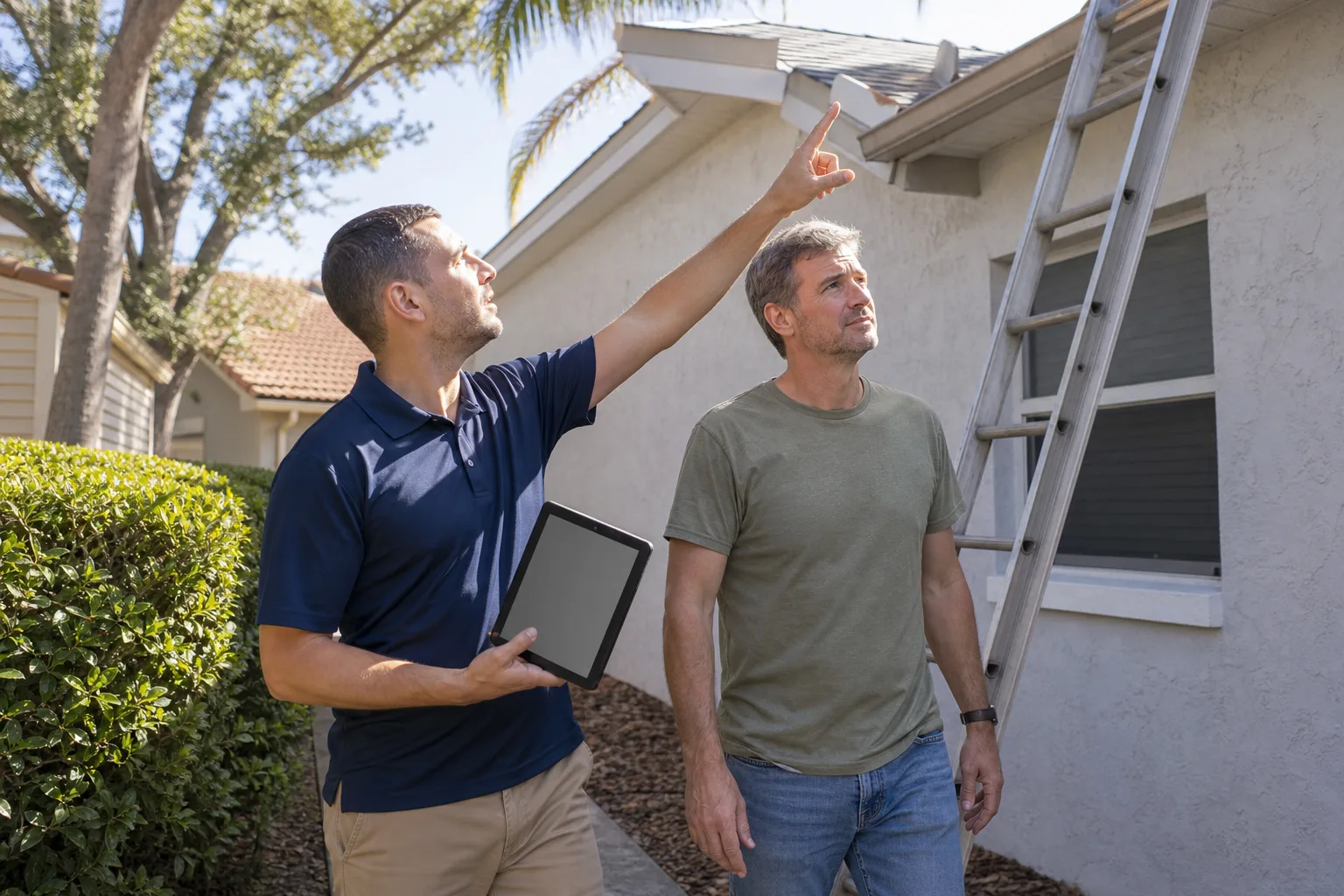
If you’ve cleared the gutters, checked the drain, and the stain still comes back after every storm, the water is entering at a joint you can’t see from the ground. Groundwork Construction Co. of Westchester offers a no-pressure roof assessment in Westchester, with permit-fluent diagnosis and upfront pricing. Call (833) 630-4214 to schedule yours.
Written by the team at Groundwork Construction Co. of Westchester, serving Westchester, FL.