
Last updated November 18, 2026







Free written scope consultation - allowances, timeline, and change-order rules on paper before a single trade is scheduled
Construction Warning Signs: A Westchester Homeowner’s Reference Guide
A hairline crack in drywall might be settling. The same crack above a door frame in a Westchester home with clay-heavy soil under its slab might be telling you the foundation is moving, and those two situations require completely different responses. That distinction is the whole point of this guide. Most warning-sign lists homeowners find online focus on the cosmetic: peeling paint, a stuck window, a stain on the ceiling. We’re going to skip past that and look at the structural and systemic failures specific to Westchester homes, the ones that signal something going wrong inside the walls, under the slab, or in the drainage plane before it turns into a six-figure problem. By the end you’ll know what you’re actually looking at, in what order to check it, and when a call beats a guess.
Quick Answer
The warning signs that matter most in Westchester are not cosmetic. They’re structural and systemic: cracks that are wider than a dime or run diagonally from a corner, moisture showing up in a place with no obvious source, efflorescence blooming on block walls, and roofing or waterproofing failures that announce themselves far from where they start. Read the pattern and the location, not just the symptom. Foundation movement, roof-plane leaks, and drainage problems are the three failures that quietly cost the most in this climate, and each one gives you warning if you know where to look.
Styles & brands we work with
- Kitchen remodeling
- Bathroom remodeling
- Home additions & ADU
- Roofing
- Windows & doors
- Driveway & pavers
- Fence
Table of Contents
- Crack Patterns That Actually Mean Something
- Moisture in Unexpected Places
- Reading a Failing Flat or Low-Slope Roof
- Efflorescence and What It Tells You About Block Walls
- The Post-Storm Inspection Sequence
- Clay Soil and Westchester’s Foundation Reality
- Your 48-Hour Home Check
- How the Warning Signs Change Your Hiring Decision
Crack Patterns That Actually Mean Something
Every crack is a message about movement. What separates harmless from serious is three things: where it is, which way it runs, and how wide it’s gotten. A crack you can slide a business card into and that hasn’t changed in five years is a very different animal from one that’s grown a quarter inch since last spring.
In Westchester, the soil under a lot of these homes holds water. Clay-heavy ground swells when it’s wet and shrinks when it dries, and that cycle pushes and pulls against a foundation year after year. Florida’s wet season followed by a drier stretch is a seasonal workout for the slab. When the foundation responds to that movement unevenly, the house above it telegraphs the stress in specific ways.
Here’s how to read them:
- Vertical hairline cracks in drywall, especially at seams and corners, are usually normal settling or thermal movement. Note them, photograph them with a ruler for scale, and track them.
- Diagonal cracks that start at the corner of a door or window opening and run up and out at roughly 45 degrees are the classic signature of differential settlement. The opening is the weakest point, and the stress concentrates there first.
- Stair-step cracks following the mortar joints of a block or brick wall are a structural flag. They trace the path the movement took through the weakest part of the assembly.
- Horizontal cracks in a foundation wall or block wall often point to lateral pressure, soil pushing inward, which is a different and sometimes more urgent problem than settling.
- Width over about a quarter inch, or a crack that’s wider at one end than the other, deserves a professional look regardless of orientation.
One behavior matters more than any single crack: change. Measure, photograph, date it, and check again in thirty days. A crack that’s stable is a record. A crack that’s moving is a warning. In our experience walking through Westchester homes, the ones that get expensive are rarely the ones with the biggest crack. They’re the ones where nobody tracked whether it was still growing.
Moisture in Unexpected Places
A water stain on a second-floor ceiling usually has nothing to do with anything on the second floor. That’s the counterintuitive part. Water travels along the path of least resistance, which often means a roofline, a flashing detail, or a wall assembly three feet or more away from where it finally drips through. By the time you see the stain, the water has been traveling for a while.
This is the single most misread warning sign in Westchester homes. Homeowners see a ceiling stain and assume a plumbing leak directly above it. Sometimes that’s right. But when the stain sits near an exterior wall, near a roof valley, or at the joint where a low-slope roof meets a wall, the source is almost always the building envelope, not the plumbing. Florida’s afternoon storms drive water sideways and upward, and any weak flashing detail becomes an entry point that shows up indoors feet away.
What to check, in order:
- Look up and out. Find the nearest exterior wall or roof intersection to the stain and trace a line from the stain toward the roofline. That’s your search zone.
- Check the attic at that line. Look for dark staining on rafters, sheathing, or insulation, and for any daylight where there shouldn’t be. Insulation that’s wet or matted holds the evidence.
- Note the timing. A stain that spreads only after heavy rain points to the roof or wall. One that grows steadily regardless of weather points toward plumbing or condensation.
- Feel the drywall around it. Soft, bubbling, or slightly swollen drywall means the moisture has been present long enough to damage the substrate, and the problem is active, not old.
A dry water mark is a past event. A soft or spreading one is happening now, and it’s the difference between a repair and a remediation. The earlier you catch it, the less of the wall assembly you have to open up. This is also the reason we recommend written line-item scope on any water-related repair: you want to know exactly what’s being dried, replaced, and sealed, not just “fixed.”
Reading a Failing Flat or Low-Slope Roof
Westchester has plenty of flat and low-slope roof sections, and they fail differently than steep-slope shingle roofs. Water doesn’t run off a low-slope plane the way it does a steep pitch. It sits, it finds the seam, and it works its way in slowly. By the time you see an interior stain, the membrane has usually been compromised for a season or more.
The warning signs on the roof itself, before the interior is ever involved:
- Ponding water that lingers more than 48 hours after a storm means the drainage isn’t working and the membrane is under constant strain. Look for clogged drains, low spots, or sagging decking.
- Blistering or bubbling in the membrane surface, which signals trapped moisture or adhesion failure beneath it. Once blisters open, the roof is no longer waterproof.
- Lifted, cracked, or dried-out sealant at the seams, terminations, and where the roof meets a wall or penetration. Every one of those details is a potential entry point.
- Granule loss or bare spots on the surface, which accelerate the next failure.
- Interior signs near the roof edge: staining on the ceiling near an exterior wall, or discoloration at the top of the wall itself, which often traces back to a failed flashing detail above rather than the wall.
Low-slope roofs live or die on details. The broad field of the roof is usually fine; the terminations, penetrations, and transitions are where water gets in. In our experience, a membrane that reads “worn but intact” from the ground and “compromised at three seams” from up close is the most common story. That’s why a roof problem diagnosed from a stain alone tends to get under-scoped. When a low-slope section is genuinely at end of life, a proper replacement is a planned project, not a same-afternoon fix, and it’s worth getting a written scope before any work begins.
Efflorescence and What It Tells You About Block Walls
That white, powdery bloom on a block or concrete wall is efflorescence, and it’s more than surface staining. It’s salt pushed out of the masonry by water moving through the wall from the wet side to the dry side. The white crystals are the visible result of a hidden process: moisture traveling through the block, and pressure from outside forcing it inward.
That distinction is the whole reason this sign belongs in a guide about real warning signs. Efflorescence is not a cosmetic problem you scrub off and forget. Scrubbing it may clean the surface, but the water is still migrating through the wall, and the salt is going to keep coming back. Where efflorescence appears tells you a lot about where the water is getting in.
- Efflorescence near the base of a wall usually points to groundwater, poor grading, or a drainage plane that isn’t shedding water away from the building.
- Efflorescence under window openings or at the top of a wall tends to trace to a failed flashing or a lack of a proper header water-shedding detail.
- Efflorescence on an interior block wall means the moisture is inside the envelope, which is a bigger concern than an exterior bloom and can eventually damage interior finishes.
- Efflorescence that recurs after cleaning is confirmation the water source is still active.
A related sign to watch for is spalling, where the block face flakes or chips away, which indicates enough moisture cycling that the masonry itself is breaking down. Once you’ve got both bloom and spalling, the wall is telling you the drainage and waterproofing on the wet side need attention, not the paint on the dry side. Correcting grading, extending downspouts, and repairing the drainage plane is the actual fix. In some Westchester homes with fence lines and driveway pavers abutting the building, the drainage calculation is part of the same conversation, and a replacement like Driveway & Pavers in Westchester is often the moment to correct grading at the same time.
The Post-Storm Inspection Sequence
After a major weather event, the first 48 hours matter more than the next two weeks. Not because a crew is going to arrive that fast, but because some damage worsens with every hour it goes unaddressed, and some damage can be documented before the evidence is lost. The sequence below is what we’d walk first, in this order.
- Roof and roofline from the ground. Before anything else, look up. Missing shingles, lifted flashing, visible membrane damage, or displaced ridge components are your first data points. Don’t get on the roof in the aftermath of a storm; that’s a job for a trained professional, and height work right after weather is how serious injuries happen.
- Attic at the high points. Daylight through the sheathing, wet insulation, or fresh stains on rafters show water that made it in. Document with photos before anything gets moved.
- Ceiling and wall stains near roof intersections. This is where the travel-distance rule from the moisture section applies. A stain is evidence from a point in the path, not necessarily the entry point.
- Windows and door openings. Check for water intrusion at sills and frames, and for signs that wind-driven rain got past seals. A window that’s sealed and flashed correctly sheds it; one that isn’t leaks quietly.
- Exterior walls and block walls. Look for fresh efflorescence, which can appear within days after a storm pushes water into the masonry.
- Fence lines and site drainage. Check whether storm water drained away or pooled against the house, and whether a fence or paver surface took damage that affects how water moves near the foundation. A damaged fence isn’t an emergency, but it can be part of a drainage problem, and replacing it correctly is the subject of Fence Installation in Westchester.
The rule of thumb: document first, then stabilize. Photos with timestamps and a note of when each issue appeared preserve the record, whether you’re working with an insurer or a contractor. Then address the things that get worse with time, water intrusion and exposed openings, before the things that can wait. Structural repairs and replacements are planned work, and they should be scoped in writing, with permits pulled where required, not rushed in a panic the day after a storm.
Clay Soil and Westchester’s Foundation Reality
The reason Westchester foundations need their own mental model is the soil. Clay-heavy ground behaves like a sponge with a memory. When it’s saturated, it expands; when it dries, it contracts; and the foundation sitting on top of it rides that cycle season after season. In Florida, that’s a wet season and a drier season, and over years the movement shows up in the house above.
What that looks like in practice:
- Doors and windows that stick seasonally but free up in a different season are often a sign the framing is riding the foundation’s movement. A window that sticks all year is a different problem.
- Uneven floors and a slope you can feel underfoot, or a marble you set down that rolls in the same direction every time, deserve a closer look at the slab and the soil beneath it.
- Gaps at the top or bottom of a door, or a door frame that’s gone visibly out of square, are the kind of pattern that reads as settling to a casual eye and as foundation movement to a trained one.
- Cracks that return after being patched are the soil-and-foundation story repeating itself. Patching the drywall hides the message; it doesn’t deliver it.
- Pooled water against the foundation after rain keeps the clay saturated exactly where you don’t want it, which is why site grading and drainage are part of any foundation conversation in Westchester.
When foundation movement is suspected, the right response is a professional evaluation of the foundation and the drainage around it, not a cosmetic repair to the drywall. And the honest caveat: some foundation issues are serious and need structural repair; many are manageable once the water is controlled. The only real mistake is treating a moving foundation as a paint problem and waiting for it to become a demolition problem. If the evaluation calls for added living space or a structure tied into the existing foundation, that’s where a properly engineered addition comes in, the kind we cover under Home Additions & ADU in Westchester.
Your 48-Hour Home Check
You don’t need a contractor on site to do a first-pass inspection. You need a flashlight, a phone camera, a notepad with dates, and the discipline to look in the right order. Here’s the short version you can run yourself.
- Walk the perimeter from the ground. Look up at the roofline and down at the grading. Note anything that changed since your last walk, and photograph it with something for scale.
- Check the attic. Daylight, stains, wet insulation. Document before you disturb anything.
- Scan interior ceilings and walls near exterior walls and roof intersections. Look for stains, bubbling, and softness, and note which side of the house they’re on.
- Test the openings. Doors and windows that have started to stick, or gaps that have appeared at frames, go on the list.
- Look at exterior block and masonry walls. Any new white bloom, flaking, or widening crack gets photographed and measured.
- Check the drainage. Confirm water sheds away from the house, not toward it, and that downspouts are doing their job.
- Date everything and repeat in 30 days. The comparison is the payoff. Movement and recurrence are what separate a record from a warning.
Keep the notes. When you eventually call someone, a dated set of photos and measurements is worth more than a vague description, and it’s the foundation of a written scope. This is also where the value of a documented first pass shows up: you can tell a contractor exactly what you saw and when, and a good one will use that to zero in instead of starting from scratch.
How the Warning Signs Change Your Hiring Decision
Once you’ve identified real warning signs, the question shifts from “what is this?” to “who do I bring in, and what should I expect from them?” That’s where most of the pain actually lives. Bad hires on warning-sign repairs are how a manageable issue becomes a six-figure problem, and it almost always comes down to the same handful of failures: vague scopes, invisible crews, and warranties that don’t survive first contact with a problem.
The signs to demand from whoever you hire, in evidence:
- A written line-item scope that says exactly what’s being repaired or replaced, in what materials, to what standard. Not “fix roof leak.” Upfront pricing, no surprises.
- Permits pulled where the work requires them and inspections passed. A contractor who wants to skip permits on structural or envelope work is telling you something.
- A real workmanship warranty in writing. We back every project with our 730-Day Done Right Promise: if it’s not done right, we make it right. One of the longest workmanship guarantees in residential construction.
- A live person on the phone, not a voicemail black hole. Our calls are answered by a live person 24/7, no voicemail, no waiting until Monday.
- Verified, professional crews. Our technicians are background-checked and arrive in uniform, on every job. No unmarked vans, no strangers.
One more thing homeowners in Westchester don’t always expect: the materials matter as much as the crew, and they should be nameable. The best contractors work with a curated set of brand partners and will tell you exactly which ones they’re using and why. Quality you can specify beats availability you’re stuck with. That’s the same principle behind Groundwork Construction Co. of Westchester home and every project we take on, where the scope names the materials and the guarantee backs the workmanship. Financing helps too: we offer 0% financing for 18 months plus $1,000 off projects over $10,000, so a real fix doesn’t have to wait for a windfall.
Common Mistakes to Avoid
- Judging a crack by its size instead of its pattern. A wide hairline can be benign and a thin diagonal can be serious. Read the orientation and the location, then track whether it grows.
- Patching a returning crack and calling it fixed. If the crack comes back after the drywall patch, the underlying movement is still active, and the next repair will be bigger.
- Assuming a ceiling stain is directly above the leak. In Westchester, the source is often at the roofline or wall a few feet away. Hunt the path, not the drip point.
- Scrubbing efflorescence off a block wall and stopping there. The white bloom is a symptom of water moving through the wall. Clean it and the source returns with the next rain, often with spalling behind it.
- Neglecting site grading near the foundation. Water pooled against clay soil keeps the foundation under constant movement. Fixing the interior while ignoring the drainage is half a repair.
- Rushing a post-storm repair without a written scope or permits. Storm urgency is real, but structural and envelope work should be scoped in writing with permits where required, not improvised the day after.
- Hiring the first person with a truck. On warning-sign repairs, the crew matters more than the price. Ask for proof of insurance, a written scope, a warranty, and pull permits.
See the difference
 Before
 After
 Before
 After
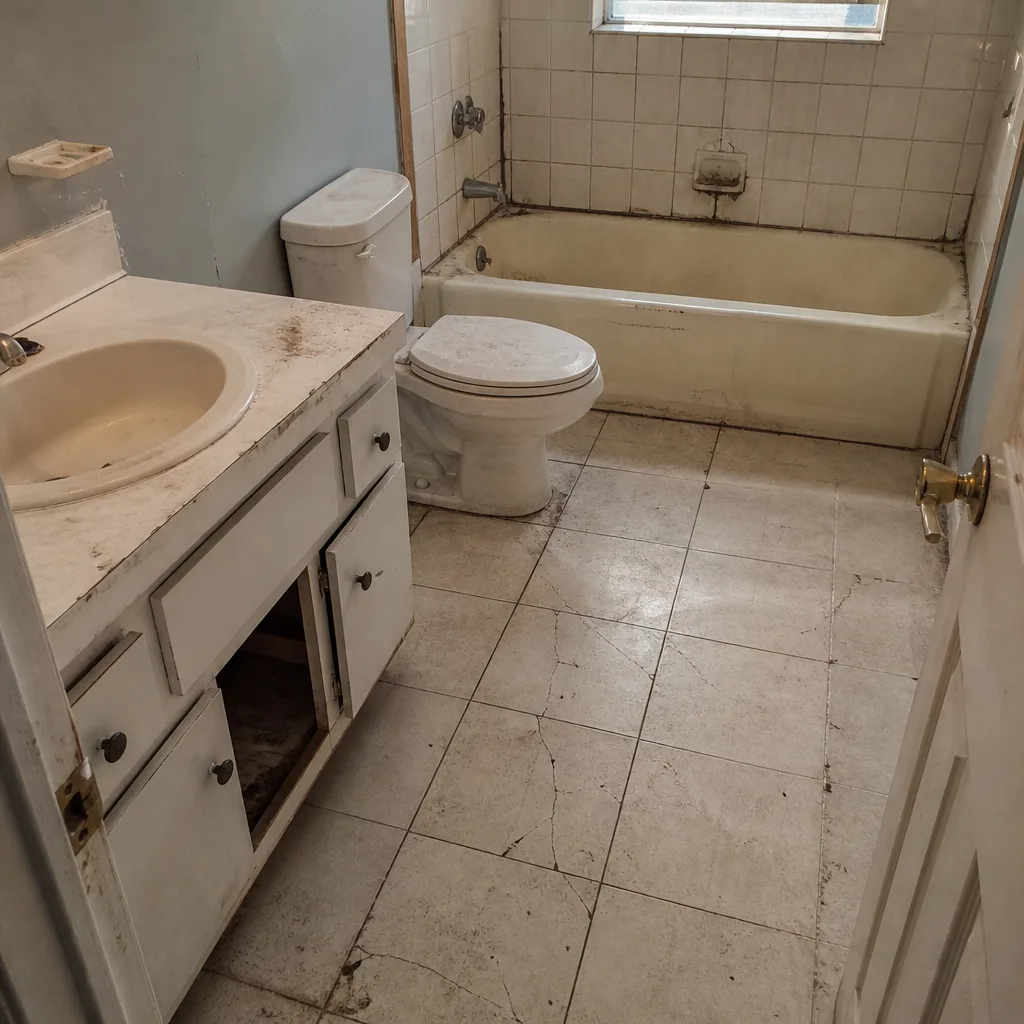 Before
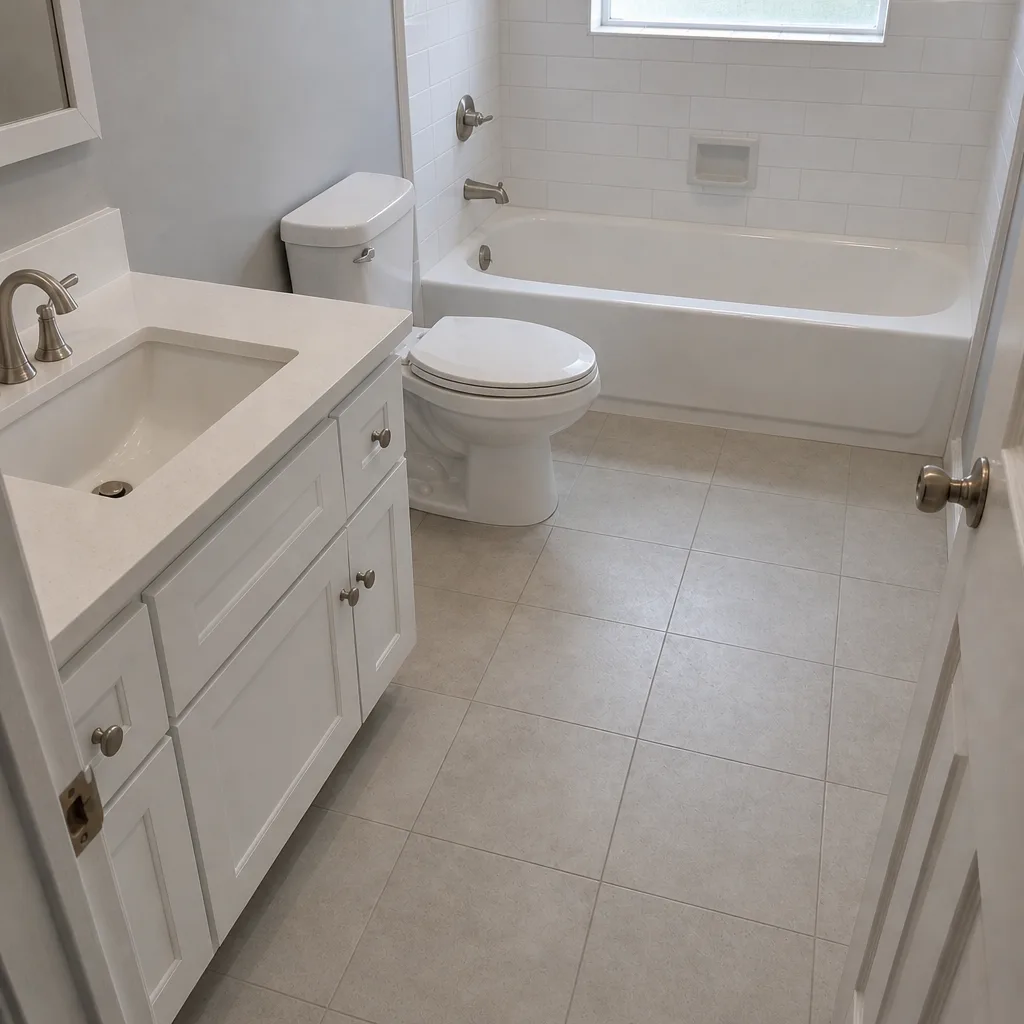 After
When to Call a Professional
You should call a professional when the warning sign involves the structure, the envelope, or the foundation, and when you can’t confidently tell which of the three you’re looking at. Specifically: any crack that’s still changing after thirty days, any diagonal or stair-step crack, water staining that’s soft or spreading, recurring efflorescence with spalling, any roof or low-slope issue diagnosed only from a ceiling stain, and any sign of foundation movement that affects doors, windows, or floors. On genuinely dangerous components, high-tension work, roof-height work, or structural repair, that call is not optional: please stay off the roof and leave structural fixes to trained professionals. A short evaluation now beats an emergency later, and it beats guessing wrong by a wide margin.
Groundwork Construction Co. of Westchester offers free estimates in Westchester. Call (833) 630-4214. Our calls are answered by a live person 24/7, our estimates are no-hassle and upfront, and every project we take on is covered by the 730-Day Done Right Promise. From foundation to finish line, we’d rather tell you the truth about a hairline crack than sell you something you don’t need.
Frequently Asked Questions

A diagonal or stair-step crack that keeps widening is the most serious common sign, because it points to differential foundation movement. Horizontal cracks in a block wall are close behind. Both deserve a professional evaluation. Call (833) 630-4214 for a free estimate in Westchester.
About a quarter inch in width, a crack that’s wider at one end than the other, and any crack that’s still growing after thirty days all cross the line from cosmetic to structural. A business-card-width crack that’s unchanged for years is usually benign. If you’re not sure which kind you have, photograph it with a ruler and call (833) 630-4214.
Because water travels along the path of least resistance from a roofline, flashing detail, or wall assembly that could be several feet away. In Westchester’s storm climate, wind-driven rain finds the weak detail and shows up indoors at the nearest low point. Trace the ceiling stain toward the nearest exterior wall or roof intersection, then look in the attic. Call (833) 630-4214 for a free evaluation if the stain is soft or spreading.
It means water is moving through the wall from the wet side to the dry side and pushing salt out, so it’s a moisture-migration warning, not surface staining. Cleaning it won’t fix it. Recurring bloom plus spalling means the drainage and waterproofing need attention. Call (833) 630-4214 for a free estimate on correcting the source.
Look up from the ground at the roof and roofline, check the attic at the high points, scan interior ceilings and walls near roof intersections, check openings and block walls, and confirm site drainage. Document everything with dated photos before stabilizing. Stay off the roof; leave height and structural work to trained professionals. Call (833) 630-4214 if anything is soft, spreading, or moving.
Yes, more than almost any other repair. Vague scopes, missing permits, and warranties that don’t hold up are how a manageable fix becomes a six-figure problem. Insist on a written line-item scope, permits where required, a real workmanship warranty, and verified crews. We back every project with the 730-Day Done Right Promise, answer calls 24/7 with a live person, and use background-checked, uniformed technicians. Call (833) 630-4214 for a free estimate.
The Bottom Line
The warning signs that cost Westchester homeowners the most aren’t the cosmetic ones. They’re the structural and systemic ones: cracks that follow a pattern and keep growing, moisture that shows up far from its source, a low-slope roof failing at its details before it fails at its field, efflorescence that says water is moving through the block wall, and foundation movement shaped by clay-heavy soil. Read the pattern, the location, and the change. Track everything with dated photos, fix the water before the damage, and hire a contractor who puts the scope, permits, and warranty in writing. When you’re ready for a professional read on what you’re seeing, Groundwork Construction Co. of Westchester is here, backed in writing and built to last. Call (833) 630-4214 for your free estimate and design consult.
Written by the team at Groundwork Construction Co. of Westchester.