Last updated November 18, 2026






Free written scope consultation - allowances, timeline, and change-order rules on paper before a single trade is scheduled
Bathroom Remodeling Maintenance Schedule: What to Do and When
The average grout joint starts absorbing moisture within 18 months if left unsealed. Most remodeling contracts end the day the tile installer walks out the door, which means the person who just spent $25,000 on a new bathroom is handed zero instructions for keeping it that way. We’ve torn out plenty of Westchester bathrooms that were only a few years old and already failing at the caulk lines, the fan, and the shutoff valves – none of it from bad materials, all of it from a missing maintenance rhythm. This guide gives you that rhythm: month by month, material by material, and specific to how humidity behaves in Westchester, FL. You’ll learn what to check, when, and what voids your coverage versus what’s protected.
Quick Answer
Your bathroom remodel maintenance schedule starts the day the crew leaves and runs on four tiers: monthly (check caulk, run the fan, inspect under the vanity), quarterly (clean the exhaust fan grille, test shutoff valves, reseal stone), annually (reseal grout and stone, re-caulk high-moisture joints), and multi-year (replace the fan motor, re-grout failing floors, inspect plumbing connections). In Westchester’s humidity, the first 12 months after a remodel carry the highest failure risk because materials are still settling. The three spots most homeowners never check are the tub-to-tile caulk transition, actual exhaust fan CFM performance, and the supply line connections under the vanity.
Styles & brands we work with
- Kitchen remodeling
- Bathroom remodeling
- Home additions & ADU
- Roofing
- Windows & doors
- Driveway & pavers
- Fence
Table of Contents
- The First-Year Post-Remodel Schedule: Month by Month
- The Material Clock: Porcelain vs. Natural Stone vs. Engineered Quartz
- The 3 Spots Contractors Never Tell You to Check
- Westchester Humidity: How It Accelerates Failure Points
- Your 730-Day Done Right Promise vs. Owner Maintenance
- Seasonal Adjustments for Westchester Homes
- What Maintenance and Repairs Cost in Westchester
- When Maintenance Turns Into a Professional Repair
The First-Year Post-Remodel Schedule: Month by Month
The first 12 months after a bathroom remodel are the highest-risk window. Wood moves, thinset and grout fully cure, caulk skins over and then shrinks, and plumbing connections that were torqued during installation loosen as water pressure cycles. This is when most early failures happen. A simple calendar entry each month keeps you ahead of them.
Here’s the schedule we hand to homeowners after a Groundwork Construction Co. of Westchester bathroom remodel:
- Month 1: Run every fixture hot and cold for two minutes. Check the base of the toilet for any rock or wobble. Look under the vanity for dampness on the cabinet floor. Confirm the exhaust fan pulls a piece of toilet paper flat against the grille.
- Month 2: Inspect the caulk line where the tub or shower pan meets the tile. Hairline separation is normal as the tub settles; a full gap is not. Re-caulk thin sections with 100% silicone.
- Month 3: Check the grout on the shower floor and any horizontal ledges. Dark patches that don’t dry overnight signal a moisture problem, not just a cosmetic one.
- Month 4: Clean the exhaust fan grille for the first time. Dust and construction residue from a fresh remodel clog the blades faster than normal.
- Month 5: Test the shutoff valves under the sink and behind the toilet. Turn them off and on gently to confirm they move. A seized valve is a real risk during an emergency.
- Month 6: Recheck every caulk joint. This is when shrinkage reveals itself most clearly. Plan on a half-tube of silicone every six months in Westchester.
- Months 7-9: Watch for any new hollow sound under floor tile. Porcelain laid over a plywood subfloor can develop voids if the subfloor wasn’t perfectly rigid, and those voids spread.
- Months 10-12: Full annual pass: reseal grout in wet zones, reseal natural stone, deep-clean the fan, inspect the shower valve cartridge handle for play, and check the toilet’s wax ring seal by looking for any water staining at the base.
Write the schedule on the inside of the vanity door. It sounds old-fashioned, but the homeowners who do it are the ones who call us four years later for a faucet upgrade instead of a full tear-out.
The Material Clock: Porcelain vs. Natural Stone vs. Engineered Quartz
A one-size-fits-all maintenance checklist ignores the single biggest variable: what your bathroom is made of. Porcelain, natural stone, and engineered quartz all behave differently in a humid climate, and the maintenance intervals are not the same. Neither are the cleaning products. Get this wrong and you’ll strip a sealer or etch a surface inside a year.
Porcelain Tile
Porcelain is the most forgiving material in a Westchester bathroom. It’s dense, doesn’t need sealing, and shrugs off humidity. The maintenance focus is grout, not the tile itself. Cementitious grout absorbs moisture and needs a penetrating sealer every 12-18 months in wet zones. Epoxy grout needs resealing far less often, sometimes not at all, but it does need a pH-neutral cleaner; acidic cleaners dull the finish.
Natural Stone (Marble, Travertine, Slate)
Natural stone is porous and takes on water. Marble shower walls in a Westchester bathroom need a penetrating sealer every 6-9 months, not once a year. Marble is also acid-sensitive: vinegar, lemon-based cleaners, and many “all-purpose” sprays will etch the surface permanently. Use a stone-specific pH-neutral cleaner, dry the walls with a squeegee after the last shower of the day, and expect to re-polish or hone marble floors every 4-6 years.
Engineered Quartz
Quartz vanity tops are non-porous and don’t need sealing. What they do need is heat protection. A curling iron or straightener laid directly on the surface can leave a permanent scorch mark, and quartz resin is sensitive to prolonged direct sun through a Westchester window. The maintenance interval for quartz is essentially: clean weekly, protect from heat, and check the caulk line where the top meets the backsplash annually.
Quick material calibration
- Porcelain: seal grout annually; no tile sealing needed.
- Natural stone: seal every 6-9 months; squeegee daily; avoid every acid-based cleaner.
- Engineered quartz: no sealing; heat protection only; annual caulk check.
- Glass tile: clean with a soft cloth and pH-neutral spray; never use an abrasive pad.
- Acrylic tub or surround: avoid abrasive cleaners and scrubbing pads; the surface scratches permanently.
If you’re planning your first bathroom remodel and haven’t picked materials yet, that decision drives your future maintenance calendar more than anything else. Kohler fixtures and quality tile from a curated brand lineup start you off with materials that will take the schedule without drama. Explore our full Groundwork Construction Co. of Westchester home page to see the brand partners we work with across every trade.
The 3 Spots Contractors Never Tell You to Check
We’ve walked into hundreds of Westchester bathrooms over the years, and the failures almost always happen at the same three places. None of them show up in a standard maintenance checklist because none of them are visible without a flashlight and five minutes of crouching.
1. The caulk joint at the tub-to-tile transition
This is the single most common failure point in a bathroom. The tub is heavy and moves slightly as it fills and empties. The tile wall doesn’t move. Caulk is what bridges the two, and it takes the full brunt of water splash, soap scum, and thermal expansion. When it fails – and it will, eventually – water migrates behind the tile and into the substrate. In Westchester, we see this happen inside 18 months on bathrooms where the caulk was applied over a damp joint during installation. Check it monthly. Feel for soft spots. Re-caulk immediately when you find them with 100% silicone, not painter’s caulk.
2. Exhaust fan CFM performance
Homeowners check that the fan runs. They don’t check that it’s actually pulling air. A bathroom fan needs to move at least 1 CFM per square foot of bathroom floor, and in Westchester’s humidity, closer to 1.5 is safer. The toilet-paper test is the simplest check: hold a single square against the grille. If it falls off in five seconds, the fan is underperforming and your bathroom isn’t drying. Common causes are a clogged grille, a duct damper stuck shut, or a fan that was undersized to begin with. If you’re not sure, a $20 anemometer from an online retailer will tell you in 30 seconds what your contractor should have verified at installation.
3. Under-vanity supply line connections
This one quietly ruins cabinets. The braided stainless lines that feed your faucet and the P-trap connections under the sink are under constant pressure, and as they age, the compression fittings can weep. Nobody looks because it’s dark and awkward. Run your hand along the base of the cabinet floor inside the vanity every three months. Any dampness, white chalky residue, or musty smell is a leak. Call a plumber before it warps the cabinet, not after.
Westchester Humidity: How It Accelerates Failure Points
Westchester County sits in one of the more humid pockets of the Northeast. Summer dew points regularly climb into the upper 60s, and bathrooms in older Westchester homes – especially those without modern ventilation – hold moisture for hours after a shower. That ambient humidity is the accelerator for every failure point on this schedule, which is why our intervals are tighter than the generic ones you’ll find on manufacturer websites.
Here’s how Westchester humidity shifts the calendar:
- Caulk lifespan: 12-24 months instead of 3-5 years. Silicone failures are common at the tub-to-tile joint within the first two summers.
- Mold behind fixtures: The gap behind a vanity or shower surround becomes a condensation trap. Westchester homes with exterior walls in the bathroom see mold establish itself in that cavity within 24-36 months if the gap isn’t caulked or filled.
- Grout sealing: Annual instead of every 18-24 months. Humid air pushes vapor through cementitious grout faster than dry air does.
- Exhaust fan runtime: Run the fan for 20-30 minutes after a shower, not 5-10. The shorter runs leave the room at 80% relative humidity long after you’ve walked away.
- Windows and skylights: Westchester bathrooms with windows need their sills inspected every six months. Condensation on the interior sill is normal; water staining on the sill is not.
If your Westchester home was built before 1980, the odds are good that the original exhaust fan was undersized for the bathroom or vents into the attic instead of outside. That’s a fail point no maintenance schedule can save. A proper ducted fan is a modest investment that pays for itself in a decade of not replacing stained grout. Our team handles bathroom ventilation upgrades routinely; if you’re planning a bigger scope, our Home Additions & ADU in Westchester page shows how we tie new bathrooms into larger structural work.
Your 730-Day Done Right Promise vs. Owner Maintenance
The 730-Day Done Right Promise from Groundwork Construction Co. of Westchester is one of the longest workmanship guarantees in the residential construction space. If a bath remodel has a workmanship failure in the first 730 days – a shower pan that weeps, a tile plane that wasn’t set properly, a plumbing connection that fails from installation – we come back and make it right. That’s the guarantee, in writing.
What the promise does not cover is owner maintenance failure. Those two categories are distinct, and knowing the difference is what protects your coverage.
Covered under the 730-Day Done Right Promise
- Leaks from plumbing connections installed by our team that fail without visible damage or misuse.
- Tile that debonds from the substrate due to improper thinset coverage or inadequate subfloor prep.
- Grout cracking from installation error (not from the natural curing process in the first 30 days).
- Shower pan leaks from a membrane or weep system installed incorrectly.
- Exhaust fan failures from improper wiring or installation.
Not covered – owner maintenance responsibilities
- Failed caulk joints left unsealed past the point where the failure became visible.
- Mold growth from a bathroom that wasn’t ventilated properly by the occupant.
- Water damage from supply lines that were never checked or from a faucet cartridge that was allowed to drip for months.
- Etching, staining, or scratching from the wrong cleaners or abrasive pads.
- Damage from a shared-wall neighbor’s plumbing, exterior flooding, or a sewer backup.
The practical rule: your coverage protects workmanship, not the daily upkeep of the finished surface. Do the monthly checks and the annual resealing, keep a simple photo log of what you find, and if something fails inside the 730-day window, call us. That line is answered by a live person, 24/7. No voicemail, no Monday morning callbacks. We’ll walk through what failed and whether it’s covered.
Seasonal Adjustments for Westchester Homes
Westchester’s four-season climate means your bathroom maintenance calendar should shift with the calendar. Winter humidity is low indoors – sometimes too low – and summer humidity brings the opposite problem. Here’s how to adjust.
Spring (March-May)
This is the best month to reseal grout and natural stone. Humidity is moderate, drying times are reasonable, and the bathroom is unlikely to be in heavy use when the sealer needs 24 hours to cure. Check caulk joints everywhere after winter: Westchester homes go through a thermal cycle each winter that stresses the caulk at exterior walls. If any joint feels soft or has opened up, cut it out and re-caulk.
Summer (June-August)
This is peak mold season in Westchester. Bathrooms without windows and with undersized fans are the ones that grow visible mold. Ramp up exhaust fan runtime to 30 minutes after every shower. Check the wall behind the toilet tank and behind the vanity for any dark spotting. Run a dehumidifier in the bathroom for a few hours each week if your home doesn’t have central air running continuously. Skip resealing during a heat wave; sealers cure poorly in high humidity and can cloud.
Fall (September-November)
Inspect the tile floors before winter. Fall is the time to catch hollow tiles and re-grout before the heating season expands and contracts the substrate. Check any skylight or window for condensation on cold mornings; if it’s persistent, the seal has failed. Rake leaves away from exterior bathroom windows to keep the wall cavity dry.
Winter (December-February)
This season’s failure points are pipe freezing and dry air. If a bathroom sits on an exterior wall, keep the cabinet doors under the vanity open during cold snaps so warm air reaches the supply lines. In very dry winter homes, run a humidifier to keep relative humidity around 35-45%: too dry and wood cabinets crack, too humid and mold returns. Winter is the least good time to reseal grout; use it for inspections instead.
What Maintenance and Repairs Cost in Westchester
Maintenance itself is cheap. Repairs are expensive. Here’s a realistic look at what each costs in the Westchester market, based on what we see when we walk through homes with deferred bathroom maintenance.
- DIY maintenance cost: $40-$80/year for silicone caulk, grout sealer, a pH-neutral cleaner, and fan grille filters.
- Annual professional maintenance visit: $150-$350 for a full inspection, reseal, and caulk touch-up.
- Re-caulk tub-to-tile joint: $120-$250 if done by a pro (materials plus proper silicone prep and cure time).
- Exhaust fan replacement (properly sized, vented to exterior): $350-$650 installed, less if the existing ducting is usable.
- Re-grout a shower floor: $400-$900 depending on tile size and grout type.
- Address a failed shower pan: $1,800-$4,500 – and this is what skipping maintenance gets you.
- Faucet cartridge replacement: $150-$300 installed.
- Under-vanity supply line replacement: $100-$200 for both lines if caught before water damage.
- Mold remediation behind a vanity or surround: $800-$2,500 depending on the extent.
- Full remediation from a slow leak under the vanity: $2,000-$6,000 once the cabinet and subfloor are involved.
An hour of maintenance a month for two years of a 730-Day Done Right Promise is the cheapest insurance policy in homeownership. If a bathroom issue is creeping past what maintenance can fix, call (833) 630-4214 for a free estimate in Westchester. We’ll tell you straight what’s maintenance and what’s demolition.
When Maintenance Turns Into a Professional Repair
Most of this guide is about what you do yourself. Some of it isn’t, and we’d rather tell you plainly than have you tackle something that will cost more if it goes wrong. Call a licensed professional when:
- Water is appearing outside the shower footprint, or anywhere on a wall behind tile.
- A floor tile sounds hollow when tapped, spreading in any direction.
- The exhaust fan runs but no longer pulls toilet paper against the grille even after a full clean.
- You see staining or discoloration on the ceiling of the room below the bathroom.
- The toilet rocks or has a persistent odor at the base (wax ring failure).
- Mold has spread beyond the size of a dinner plate or is present behind a fixture.
- Any supply line under the vanity shows corrosion on the braided mesh.
Groundwork Construction Co. of Westchester offers free estimates in Westchester – call (833) 630-4214. We’re a full-scope home construction partner, which matters here: if a bathroom maintenance issue turns into a mid-remodel scope expansion, you’ll have one builder, one quote, and one line of accountability from demo day to final walkthrough. Our team includes technicians with up to 12 years of experience on bathroom and kitchen work, backed by the 730-Day Done Right Promise. If you’re also managing your home’s exterior maintenance rhythm, our guides to Driveway & Pavers in Westchester and Fence Installation in Westchester follow the same seasonal logic.
Common Mistakes to Avoid
- Ignoring the first 12 months. The first year post-remodel is the highest-risk window for a reason: materials are moving. Homeowners who skip monthly checks in that first year are the ones calling us for repairs at month 14 with a failed caulk joint behind the tub.
- Using the wrong caulk. Painter’s caulk is not a bathroom caulk. It shrinks within weeks in a wet environment. In Westchester bathrooms, 100% silicone or a hybrid urethane is the only thing that holds. Anyone who tells you otherwise hasn’t re-caulked a marble shower.
- Skipping the exhaust fan check. Running a fan that isn’t pulling air is worse than running no fan at all – it gives you false confidence while humidity stays trapped in the room. Check the toilet-paper test monthly and clean the grille quarterly.
- Resealing grout over a wet joint. Sealer over moisture traps the moisture. In humid Westchester summers, give the bathroom 72 hours of full drying (fan running, doors open) before applying any grout sealer.
- Using vinegar on natural stone. Every week, we hear from a homeowner who etched a marble vanity with a lemon-scented “natural” spray. Stone cleaners are not optional on natural stone. Period.
- Forgetting the water heater. Not on the bathroom itself, but the water heater that feeds it needs flushing once a year or you’re pushing sediment into every fixture. This is a bathroom maintenance task by another name.
- Assuming the warranty is a maintenance policy. The 730-Day Done Right Promise covers workmanship, not upkeep. Letting a caulk joint sit unsealed for 18 months and then calling it a warranty claim won’t fly – and it shouldn’t. Do the work, keep a note, and if it fails, call us for a real conversation.
- Waiting until it’s visible. A slow leak under a vanity is invisible for months. By the time it shows on the cabinet floor, you’re looking at a cabinet replacement and possibly a subfloor repair. Check with your hand quarterly, not your eyes.
- Skipping the ceiling and surrounding rooms. Stain on the ceiling below the bathroom is the single most reliable indicator of a shower pan or plumbing failure. Look up every few months. It’s a 10-second check that saves thousands.
See the difference
 Before
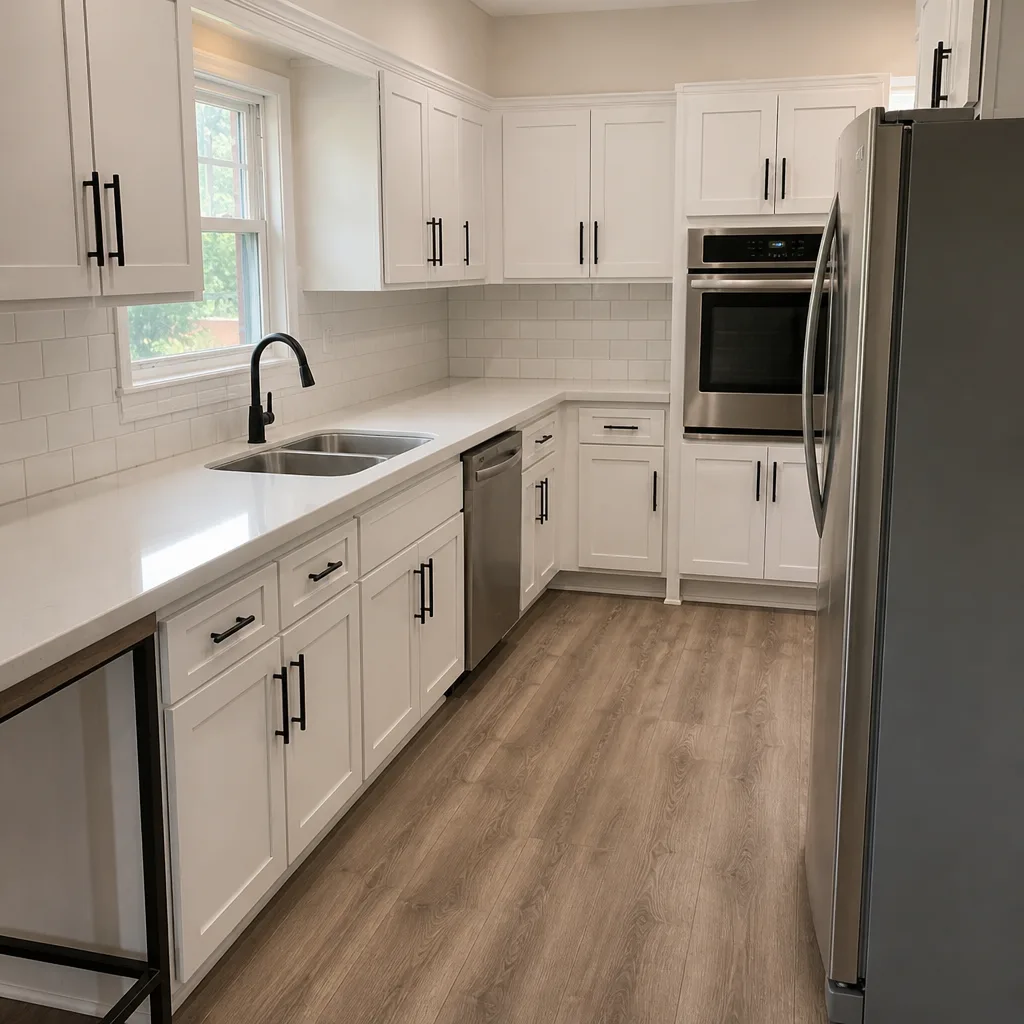 After
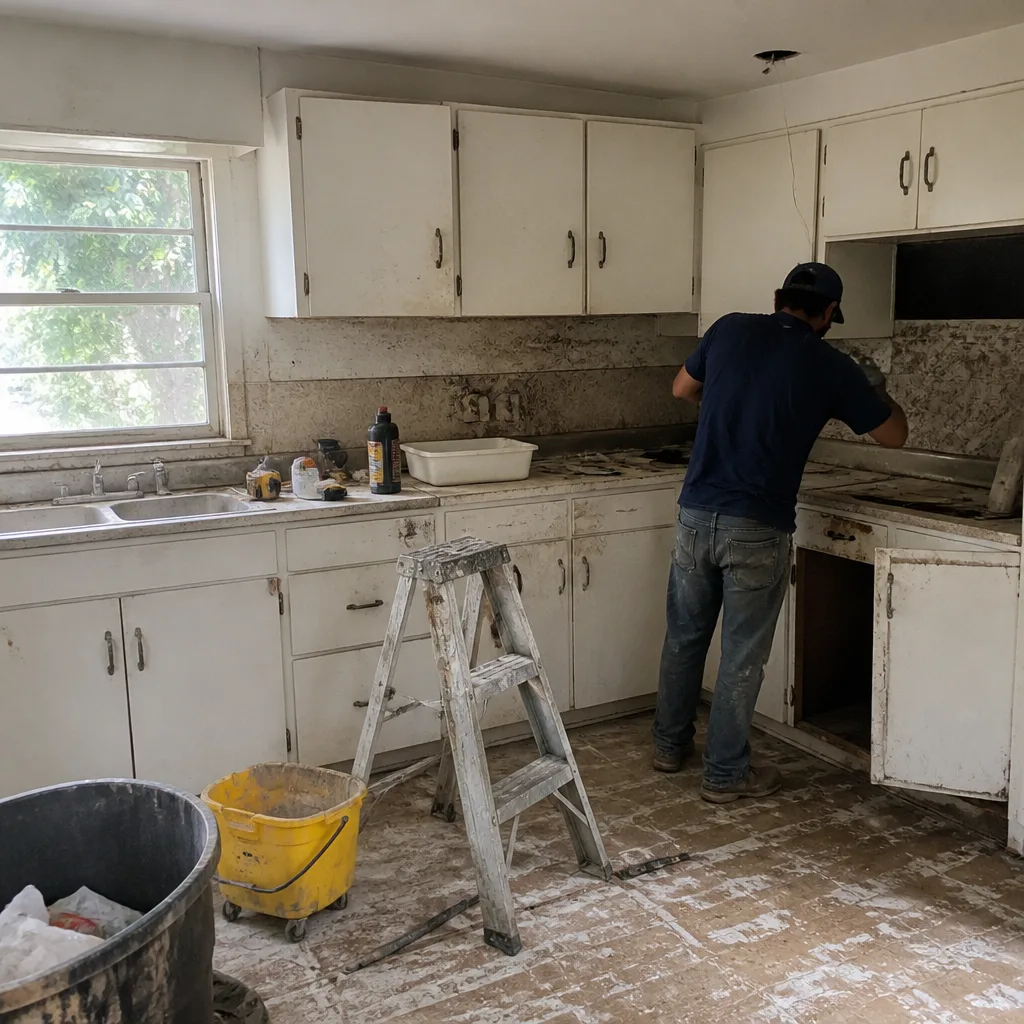 Before
 After
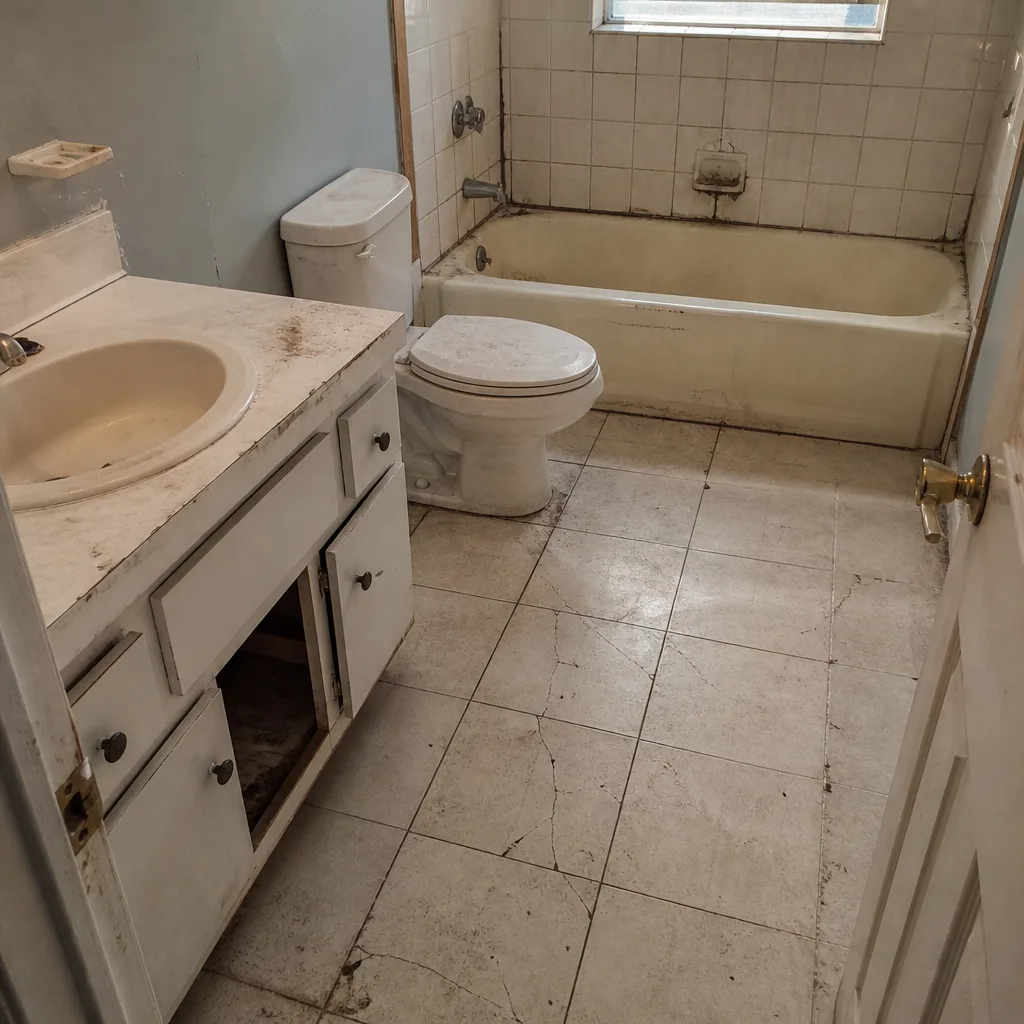 Before
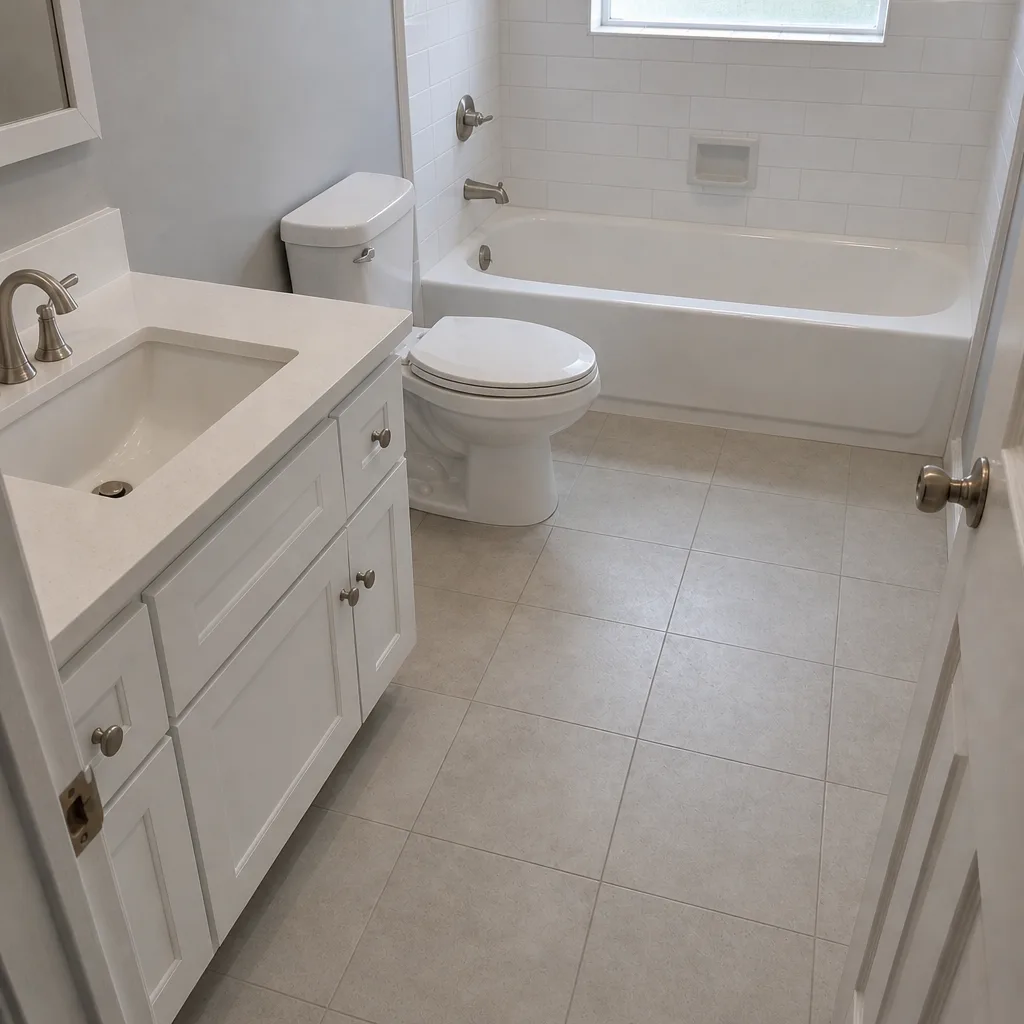 After
When to Call a Professional
Call a licensed professional – or call us directly – when any maintenance issue involves water where it shouldn’t be. That means moisture behind tile, a floor tile with hollow sound, a shower pan that weeps, an exhaust fan that runs but doesn’t move air, or any stain on the ceiling below the bathroom. Those are plumbing and structural issues, not maintenance. Note that shampooing mold out of a corner is a maintenance task; mold reappearing behind a shower surround is not. Same rule for the toilet: a rocking base is a wax ring replacement, which is a plumber’s job, not a homeowner’s patience test. Groundwork Construction Co. of Westchester offers free estimates in Westchester – call (833) 630-4214. We’ll walk the bathroom with you, tell you what’s a maintenance fix and what’s a warranty claim, and stay straight with you about which is which.
Frequently Asked Questions
In Westchester’s humidity, plan on a tub-to-tile caulk joint reseal every 12-24 months, with monthly visual checks in between. Bathrooms without proper ventilation sit at the high end of that range. Re-caulk as soon as you feel softness or see separation – don’t wait for water damage to show up. Call (833) 630-4214 for a free estimate if you’re not sure whether a joint can be resealed or needs cutting out.
No. The 730-Day Done Right Promise covers workmanship failures – bad thinset coverage, improper plumbing connections, incorrect shower pan installation – but it does not cover maintenance tasks like resealing grout, replacing caulk, cleaning the exhaust fan, or testing shutoff valves. The practical rule is that if a defect is visible only because maintenance was skipped, it’s an owner responsibility. If a failure happens inside 730 days and you didn’t skip anything, call us. A live person answers, 24/7, and we’ll tell you exactly what’s covered.
Hold a single square of toilet paper flat against the grille with the fan running. If it stays put for five seconds, the airflow is roughly okay. If it falls immediately, the fan is underperforming. In Westchester, where bathrooms hold moisture much longer than in drier climates, you want to see that paper stick. Common causes are a clogged grille, a damper stuck shut, or an undersized fan. A properly sized fan should move about 1 CFM per square foot of bathroom floor, ideally more. If your bathroom is 80 square feet, aim for 100-120 CFM.
The caulk joint where the tub or shower pan meets the tile. It’s the most common failure point in the entire bathroom and the one most often overlooked, and in Westchester humidity, failures happen within the first two years if the joint is not maintained. Run a finger along the joint monthly; if it’s soft, separated, or discolored, cut the failed section out and re-caulk with 100% silicone.
It shortens every interval. Westchester’s humid summers mean caulk needs replacing twice as often as in a dry climate, grout needs annual resealing instead of every 18-24 months, and exhaust fans need to run 20-30 minutes after showers instead of a quick few minutes. Homeowners who follow a dry-climate schedule in Westchester discover the gap when mold appears behind the vanity at the two-year mark – a repair that ranges from $800 to $2,500 depending on how far it’s spread.
Budget $150-$350 per year for a professional maintenance visit, or $40-$80 per year if you do it yourself with caulk, sealer, and grille filters. Skipping maintenance costs much more: a failed shower pan runs $1,800-$4,500, mold remediation behind a fixture runs $800-$2,500, and a slow leak under the vanity can hit $2,000-$6,000 once the cabinet and subfloor are involved. Call (833) 630-4214 for a free estimate and we’ll tell you honestly whether a maintenance visit will cover what you’re seeing or whether something larger needs attention.
The Bottom Line
Your finished bathroom isn’t the finish line – it’s the starting line for a maintenance rhythm that keeps the investment intact for a decade. The three points to remember: monthly checks on caulk joints, exhaust fan performance, and under-vanity supply lines; material-specific intervals, with natural stone sealed 6-9 months, porcelain annually, engineered quartz never; and Westchester humidity that pushes every interval tighter than what a manufacturer’s generic guide will tell you. The 730-Day Done Right Promise from Groundwork Construction Co. of Westchester covers workmanship failures, not skipped upkeep. Do the work, keep a note, and when something fails inside coverage, use the phone line that a live person answers at 3 a.m. that isn’t voicemail. From foundation to finish line, and built to last, backed in writing – that’s the standard we hold, on the job and in the maintenance schedule we hand you.
If it’s time for the next project – a full bathroom refresh, a second bath, or any of the trades that surround it – call (833) 630-4214 to schedule your free estimate. Upfront pricing, no surprises. We’ll walk the space, quote the work in writing, and tell you plainly which problems are maintenance and which are remodel.
Written by the team at Groundwork Construction Co. of Westchester.