Last updated November 18, 2026







Free written scope consultation - allowances, timeline, and change-order rules on paper before a single trade is scheduled
Windows & Doors Troubleshooting: Common Problems and How to Fix Them
A drafty window can add $200 to $400 a year to a Florida homeowner’s cooling bill. Here’s the part most people never hear: in our experience, roughly 60% of “drafty windows” aren’t a window failure at all. They’re a failed rough opening seal, the gap between the window frame and the house framing, that the original installer skipped or cut short. You feel the draft and assume the glass is bad. The glass is fine; the hole behind the trim is the problem. This guide works from symptom to source. You’ll learn how to trace a draft, a foggy pane, a sticking door or a wet sill back to its actual cause, and how to tell the $12 caulk fix from the one that needs a licensed contractor in Westchester.
Quick Answer
Most window and door problems trace to one of six root causes: a failed perimeter seal, broken flashing, a failed insulated glass seal, seasonal humidity movement, worn hardware, or structural settlement. Diagnose by symptom first (draft, condensation, sticking, noise, water), then trace it to the source before spending money. Condensation on the room-side glass is a humidity issue you can fix yourself; condensation between the panes means the sealed unit has failed and the glass must be replaced.
Styles & brands we work with
- Kitchen remodeling
- Bathroom remodeling
- Home additions & ADU
- Roofing
- Windows & doors
- Driveway & pavers
- Fence
Table of Contents
- Start With the Symptom, Not the Product
- Drafts: Where the Air Is Actually Getting In
- Condensation: Glass, Between the Panes, or Frame?
- Sticking Doors and Windows: Three Different Problems
- Water Intrusion: The Three Entry Points, Ranked
- Noise and Whistling: What They Tell You
- Repair or Replace? The Thresholds That Decide It
- What’s Different About Windows and Doors in Westchester
Start With the Symptom, Not the Product
The mistake homeowners make is starting with the product. “My window is bad, I need a new window.” That’s backwards. Start with what you see or feel, then walk backward to the source. The same draft can come from four completely different failures, and only one of them involves the window unit itself. Get the diagnosis right and the repair cost drops by an order of magnitude.
Here’s the troubleshooting tree we use. Match your symptom to the branch, then read the matching section below.
- You feel air moving. Likely a perimeter seal, weatherstripping, or rough opening gap. Rarely the glass.
- You see fog or water on glass. Room-side fog is humidity. Between-the-panes fog is a failed sealed unit.
- The door or window sticks. Could be seasonal swelling (harmless), hardware (easy), or settlement (serious).
- Water is coming in. Flashing, sealant, or sill. Almost never the glass itself.
- You hear whistling or traffic noise. Air leaks, weatherstripping gaps, or a hollow frame.
In Westchester and the surrounding communities, the most common misdiagnosis we see is a homeowner replacing a perfectly good window when the actual failure was a two-inch gap in the rough opening seal. Before you price a replacement, confirm the frame perimeter is sealed. That single check saves people thousands.
Drafts: Where the Air Is Actually Getting In
A draft has three possible sources, and they’re ranked here by how often we find them. Notice the window glass is last.
1. The rough opening seal. When a window is installed, the gap between the frame and the house framing gets insulated and sealed. If that step is rushed, you get a permanent draft that feels like it’s coming through the window. It’s actually coming around it. Pull the interior trim back carefully and look. Missing insulation or a bead of sealant that stops halfway is the giveaway.
2. Weatherstripping and the sash seal. The gasket that seals the moving sash against the frame flattens over time. This is common on sliding windows and doors. You can usually see daylight or feel air at the meeting rail. Replaceable weatherstripping costs very little and fixes it.
3. The glass and frame interface. Least common. Glazing that’s cracked, or a frame that’s warped so the sash can’t seat. This is when the unit itself is the problem.
A quick test: on a windy day, light a stick of incense and run it slowly around the full perimeter of the window, both inside and out. Where the smoke wavers, that’s your leak. In our experience on older Westchester homes, the smoke test almost always points to the perimeter, not the sash.
Condensation: Glass, Between the Panes, or Frame?
This is the single most misunderstood window symptom, and getting it right saves you from buying glass you don’t need.
Condensation on the room-side surface of the glass means the glass is colder than the air inside your home, and the humidity in your house is high. The window is doing its job. Your indoor humidity is the problem. Fix it with a dehumidifier, better bathroom and kitchen exhaust, or by lowering the thermostat spread. You do not need new windows for this.
Condensation between the panes means the sealed unit (the insulated glass unit, or IGU) has lost its seal. Moisture got into the gap between the two panes. The fogging or water droplets are trapped in there and you can’t wipe them off from either side. This one requires replacing the glass unit. The frame and window can often stay.
Condensation on the frame or corners points to a thermal bridge or an air leak at the frame. Less common, but it can mean the frame isn’t insulating properly, or that draft from the perimeter is cooling that spot.
- Wipes off the glass? Humidity. Fix your indoor air.
- Trapped between panes? Failed IGU. Replace the glass unit.
- Pooling at the frame corners? Air leak or thermal bridge. Investigate the perimeter.
Florida’s summer humidity makes room-side condensation in Westchester extremely common. Before you call anyone about a “foggy window,” wipe it. If it comes off, you’ve answered the question yourself.
Sticking Doors and Windows: Three Different Problems
A door that won’t close is one of the most diagnostic symptoms in a house. There are three causes, and the difference between them matters a great deal.
Humidity expansion (seasonal, harmless)
Wood swells when the air is damp and shrinks when it’s dry. A door that sticks in the wet season and frees up in the dry season is doing exactly what wood does. In Westchester, that seasonal swing is real. If the door sticks only in the humid months and returns to normal later, you’re looking at normal movement. Adjust the strike plate or plane a hair off the edge, and it’s solved.
Foundation or settlement movement (serious)
If the sticking is new, permanent, and getting worse, look at the whole opening. Is the gap around the door uneven? Is the frame out of square? Is the sticking consistent regardless of season? Those point to movement in the structure, not the door. This is the one you don’t ignore. A door that starts rubbing at the top corner after years of closing fine is telling you the house has shifted. Call a structural professional before you touch the door.
Hardware failure (easy fix)
Hinges that have sagged, a strike plate that’s out of alignment, a roller that’s worn, a latch that no longer catches. The door and frame are fine. The hardware is tired. This is a straightforward repair and usually the cheapest of the three.
Ask yourself one question: did this door always stick, or is it new? Always-stuck is usually alignment or hardware. Newly-stuck is usually movement. That single question tells you which category you’re in.
Water Intrusion: The Three Entry Points, Ranked
Water getting in around a window or door is almost never the glass. It’s the perimeter. Here are the three entry points ranked by how often we find them, and how to test which one you have.
1. Sill flashing. The sill is the bottom of the opening, and it takes the most water. If the flashing under the sill wasn’t installed, lapped, or sealed correctly, water works its way in below the window. This is the most frequent culprit. Test: on a rainy day, check for moisture at the interior sill and below. Staining on the wall just under the sill is a strong sign.
2. Head flashing. The flashing above the window. If water gets behind the wall above it, it can track down and in. Test: look for water at the top corners of the window on the interior, especially after wind-driven rain from one direction.
3. Sealant at the frame perimeter. The caulk joint where the frame meets the wall. Caulk fails with sun, heat, and time. It cracks, pulls away, and lets water in. Test: run your finger along the exterior caulk line. If it’s cracked, lifting, or missing in sections, that’s a likely entry point.
To narrow it down, do one controlled test: have someone run a hose gently against the outside of the window, starting at the sill and working up, while you watch inside. Stop the water the moment you see intrusion. Where it appears in relation to where you’re spraying tells you which entry point you’re dealing with. If it comes in low, it’s the sill. High, the head. Around the edges, sealant.
Noise and Whistling: What They Tell You
Whistling and traffic noise are usually the same problem: air moving through a gap. A whistle is air forced through a small opening. If you hear it on windy days, you’ve found a leak. That’s useful. The noise is pointing you straight to the failure the way a draft test would.
Traffic noise coming through a window that used to block it well tells you something has changed. The weatherstripping has flattened, the sash isn’t seating fully, or the perimeter seal has opened up. You’re getting sound through the same paths air would move through.
A few specific things to check:
- A high-pitched whistle at the meeting rail of a sliding window usually means the weatherstripping is compressed or gone.
- Rattling in wind means the sash isn’t snug in the frame.
- Dull, hollow traffic noise with no leak suggests thin glass or an older unit without an insulated unit, upgrade territory.
In dense Westchester neighborhoods, traffic noise is a common complaint. Before assuming you need new windows, check the weatherstripping and the perimeter on the street side. You may have a much cheaper answer.
Repair or Replace? The Thresholds That Decide It
People ask us constantly whether they should keep repairing or bite the bullet. There’s no single right answer, but there are specific thresholds that make continued repair irrational. Here’s the decision framework we use.
- Failed IGU plus an aging frame. If the glass unit has failed and the frame is also showing its age, patching one doesn’t justify the other. Replace the unit.
- Repeated water intrusion after two repair attempts. If water keeps getting in after proper flashing and sealant work has been redone twice, the installation itself may be flawed. That’s replacement territory.
- Settlement-related performance problems. If the structure has moved and the window or door can’t be made to seat correctly no matter what, replacement won’t fix it either. You address the structure first.
- Single failed seal on an otherwise sound unit. Fix the perimeter. No reason to replace a good window over a bad seal.
- Weatherstripping, hardware, and adjustment issues. Fix them. These are maintenance items, not replacement triggers.
The economic threshold is straightforward: if the cost of repeated repairs approaches the cost of a replacement over a few years, and the unit is already past its useful life, replace it. One repair on a sound window is always worth doing. The third repair in a row on a tired unit usually is not.
What’s Different About Windows and Doors in Westchester
Westchester homes face a specific combination that shapes how these problems show up. The humid subtropical climate means high indoor humidity in summer, which drives room-side condensation and seasonal wood movement. Seasonal storm events put real pressure on flashing and sealant. Older housing stock in many Westchester neighborhoods means original flashing details and weatherstripping that are well past their service life.
That means two things. First, perimeter seal failures are especially common here, and they’re the most misdiagnosed problem we see. Second, the seasonal sticking that would be harmless in a dry climate is more pronounced in Westchester, so you have to check the “is it getting worse” question before assuming it’s the weather.
When a window or door problem turns into an actual construction job, replacement, reframing, or a related addition, that’s our lane. We’re a full-scope home construction company, and windows and doors are one of seven trades we handle. We work with Andersen and Marvin for windows, and we bring the same standard to every opening we touch. If your troubleshooter points to bigger work, the Groundwork Construction Co. of Westchester home page is the place to start. If the project extends out to a new patio, a paver path, or an exterior structure, we cover Driveway & Pavers in Westchester and Fence Installation in Westchester as well. And when a window or door problem is really the start of an Home Additions & ADU in Westchester project, we handle that from foundation to finish line too.
Common Mistakes to Avoid
- Replacing a window over a draft you haven’t traced. The draft may be a perimeter seal, not the glass. Confirm before you spend.
- Mistaking room-side condensation for a failed unit. If it wipes off, it’s humidity. Fix the air, not the window.
- Ignoring a newly sticking door. Seasonal movement is one thing; a door that sticks for no reason and gets worse is your cue to check the structure.
- Re-caulking over wet or dirty surfaces. Sealant won’t bond to a damp, dirty joint. Clean, dry, then seal, or it fails again in a season.
- Assuming a wet wall means the window is bad. It usually means flashing or perimeter sealant. The window is the last suspect.
- Chasing one repair after another on a unit that’s clearly done. Two or three repairs in a row on an aged unit is the signal to replace, not repair again.
- Testing for leaks with a pressure washer. Don’t. A gentle hose test at low pressure finds the entry point without forcing water somewhere it never went.
See the difference
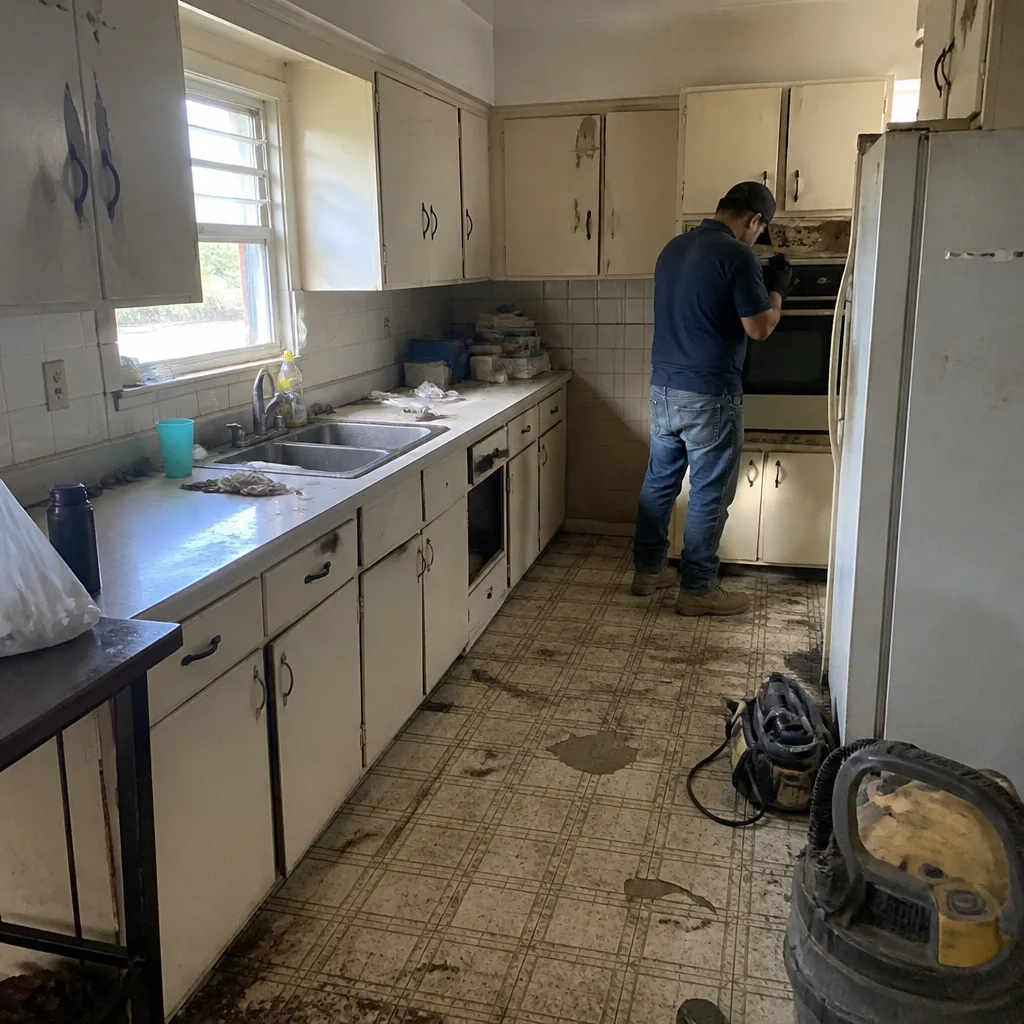 Before
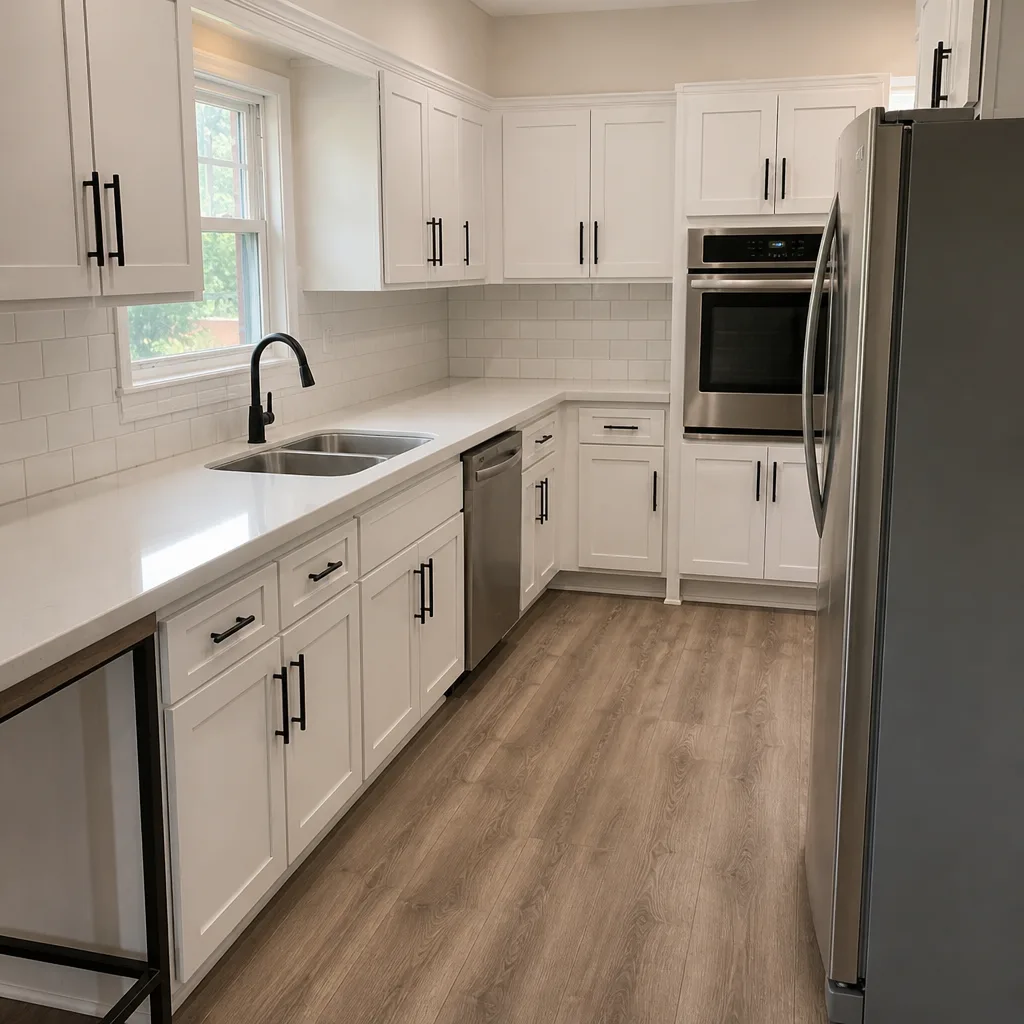 After
 Before
 After
 Before
 After
When to Call a Professional
Some of these fixes are genuinely homeowner-level: wiping condensation, replacing weatherstripping, adjusting a strike plate, a fresh bead of exterior sealant on a clean dry joint. But several scenarios call for a trained professional, and we mean that plainly. Any water intrusion into the wall cavity needs a proper diagnosis, because moisture inside a wall can damage framing, insulation, and drywall long before you see it. A newly sticking door that points to structural movement needs a structural assessment, not a handyman shaving the edge. Failed IGUs and full window or door replacement are licensed work. And any repair that requires removing trim, reframing, or opening the wall is a job for a pro.
Groundwork Construction Co. of Westchester offers free estimates in Westchester. Call (833) 630-4214 to schedule yours. Calls are answered by a live person, 24/7, and our technicians are background-checked and arrive in uniform. Every project is covered by our 730-Day Done Right Promise: if it’s not done right, we make it right. Our technicians have up to 12 years of experience, and we price upfront, so the number you see is the number you pay.
Frequently Asked Questions

Room-side fog comes from humidity and temperature, so your home likely has higher indoor humidity than your neighbor’s. The window isn’t failing; the air is moist. Run exhaust fans in bathrooms and kitchens, use a dehumidifier in summer, and the fogging settles down. If the fog is between the panes and won’t wipe off, that’s a failed sealed unit, which is a different fix. Call (833) 630-4214 for a free assessment if you’re unsure which you have.
Seasonal sticking that clears up when the air dries out is normal wood movement and usually isn’t a problem. A minor strike plate or edge adjustment handles it. The concern is a door that sticks year-round, sticks inconsistently, or gets progressively worse. That pattern points to structural settlement, and it’s worth a professional look. Call us for a free estimate if you want it assessed.
You can fix weatherstripping, sealant on a clean dry joint, and basic hardware yourself. What you can’t safely diagnose is a failed rough opening seal, which requires pulling trim and checking the gap behind it, and that’s where most Westchester drafts actually come from. A free estimate will tell you which problem you have before you buy anything. Call (833) 630-4214.
Run a low-pressure hose test starting at the sill and working slowly up the outside of the window while someone watches inside. If water appears low, it’s the sill flashing. If it appears high, it’s the head flashing. If it shows around the edges, it’s perimeter sealant. Stop the water the moment you see intrusion. Any water inside the wall deserves a professional diagnosis, so call us for a free estimate.
A failed IGU seal on a sound frame is usually worth fixing at the glass-unit level: replace the unit, keep the frame. It’s when the frame is also past its life, or you’re on your second or third repair, that replacement makes financial sense. We’ll give you a written line-item quote on both paths so you can compare. Estimates are free at (833) 630-4214.
No. We price upfront, and the number you see is the number you pay. Every quote is a written line-item breakdown, and we don’t issue surprise change orders for scope we’ve already quoted. Projects over $10,000 qualify for $1,000 off, and 0% financing for 18 months is available. Call (833) 630-4214 for your free estimate and design consult.
The Bottom Line
Most window and door problems are not the window or door. They’re the seal around it, the flashing above or below it, the humidity in your house, the hardware on the hinge, or the structure the unit sits in. Trace the symptom to its source before you spend, and you’ll avoid replacing good glass over a bad seal. Condensation that wipes off is humidity; condensation trapped between panes is a failed unit. Sticking that’s seasonal is harmless; sticking that’s new and worsening is structural. Water intrusion is flashing or sealant, ranked sill first. When the diagnosis points to real construction work, that’s what we do. Call (833) 630-4214 for a free estimate in Westchester.
Written by the team at Groundwork Construction Co. of Westchester.