Last updated November 18, 2026






Free written scope consultation - allowances, timeline, and change-order rules on paper before a single trade is scheduled
Construction Emergency Preparedness Guide for Westchester Homes
After Hurricane Irma, Westchester homeowners who had their permit history, contractor contacts, and insurance documentation pre-organized got repairs started weeks before neighbors who were still untangling paperwork. And they paid significantly less for the same work. That gap wasn’t luck. It was preparation. South Florida doesn’t ask whether storm season will bring damage to Westchester – it’s a question of when. What most homeowners don’t realize is that the first 72 hours after structural damage matter more than the storm itself, and the decisions made in that window determine whether you rebuild smoothly or lose months fighting your own insurer. This guide walks you through the year-round protocol we’ve seen work, from documentation packages to fraud detection to the triage calls you can safely make yourself.
Quick Answer
Construction emergency preparedness for Westchester homeowners means having three things ready before any storm: a sealed documentation package (photos, permits, policy details, contractor contacts), a written triage plan for post-storm structural damage, and a verification checklist to screen out predatory storm chasers. In the first 72 hours after damage, protect the property with temporary measures that don’t void your insurance claim, document everything before you move a single board, and call only state-licensed professionals for anything structural, electrical, or water-intrusion related.
Styles & brands we work with
- Kitchen remodeling
- Bathroom remodeling
- Home additions & ADU
- Roofing
- Windows & doors
- Driveway & pavers
- Fence
Table of Contents
- The Pre-Storm Documentation Package Every Westchester Homeowner Needs
- How to Triage Post-Storm Structural Damage Yourself
- Post-Disaster Contractor Fraud in South Florida: The Three Verification Steps That Stop It
- How to File a Construction Insurance Claim That Doesn’t Get Underpaid
- Emergency Tarping, Board-Up, and Water Extraction: What You Can Do vs. What Requires a License
- Westchester-Specific Risks: Flood Zones, Wind Zones, and the Building Code You Need to Know
- The First 30 Days After Damage: A Rebuild Timeline
The Pre-Storm Documentation Package Every Westchester Homeowner Needs
When a storm is barreling toward Westchester, the last thing you want to be doing is hunting for your insurance policy number or an old permit in a shoebox. The homeowners who recover fastest have a documentation package assembled months before landfall. Here’s exactly what goes in it.
What Your Package Should Contain
Think of this as the paper equivalent of a fire extinguisher: you hope you never need it, but if you do, the difference between having it and not having it is enormous. Assemble yours now, then store one copy in a waterproof container at home and one digital copy in cloud storage (or email it to yourself).
- Photographs of every exterior wall, roofline, window, door, fence line, and driveway. Date-stamp them. These become your “before” evidence.
- Interior photos room by room, especially kitchens and bathrooms. If you’ve upgraded to KraftMaid cabinetry or Cambria countertops, photograph the labels and keep receipts.
- Permit records and inspection sign-offs. Pull these from your county’s building department online portal and store PDFs.
- Your insurance policy’s declaration page, plus the full policy with the windstorm and flood coverage riders highlighted.
- Three vetted contractor contacts per trade – roofing, general construction, plumbing, electrical. Not “the guy someone mentioned.” Verified names with license numbers.
- An inventory spreadsheet listing high-value personal property with model numbers where relevant.
- Utility shut-off locations and instructions – water main, gas valve, electrical panel main breaker.
Why the Permit Records Matter More Than Most Homeowners Think
If your roof was replaced with GAF or Owens Corning shingles under a permitted job, and the county has a record of it, your insurance adjuster can’t claim the roof was “older than the policy allows” to reduce your payout. Without permit records, they often will. We’ve seen this cost Westchester homeowners thousands on a single claim.
How to Triage Post-Storm Structural Damage Yourself
Not every crack means “evacuate” and not every missing shingle means “structural failure.” Learning to triage post-storm damage yourself lets you act fast on the real problems and avoid wasting a contractor’s time on cosmetic issues – while keeping you safe.
What You Can Safely Assess
From the ground, and never on a ladder or roof, you can check:
- Whether windows and doors are still watertight (run your hand along the frame for water intrusion)
- Whether any part of the roof or siding is loose enough to flap or fall
- Whether the driveway, walkway, or paver surface has heaved or shifted
- Whether the fence line has partial or complete failure
- Whether the interior ceilings show new water stains or sagging
What Requires a Licensed Professional (Do Not Attempt)
Anything involving the following should prompt a call, not a ladder:
- Any visible sign of a compromised roof deck or attic structural member
- Sagging ceilings, cracked beams, or separation between the wall and the ceiling
- Any water intrusion near your electrical panel, outlets, or appliances
- Any gas odor or damage to gas lines
- Any bowed, buckled, or displaced window frames indicating framing stress
- Anything requiring work at height (roof, gutters, fence line repairs above six feet)
High-tension garage-door springs, gas lines, electrical panels, and any roof work carry real injury risk. Do not attempt them yourself. A trained professional handles these safely and – critically – in a way that insurers and inspectors will accept.
What Temporary Repairs Protect You Without Voiding Your Claim
The general rule across most policies: measures that prevent further damage are expected and often covered. Measures that alter the original damage can compromise your claim. Tarping a leaking roof, boarding a broken window, and shutting off water are almost always the right move. Replacing the roof before the adjuster sees it is not.
Post-Disaster Contractor Fraud in South Florida: The Three Verification Steps That Stop It
South Florida is one of the most targeted regions in the country for post-storm contractor fraud. Predatory “storm chasers” descend on Westchester after every named storm, knock on doors, quote suspiciously low prices, collect large deposits, and disappear. Protecting your property starts with three verification steps you can complete in about fifteen minutes.
Step 1: Verify the License with the State
Every legitimate contractor in Florida holds a license. Look it up yourself on the state’s licensing database. Never rely on a license number written on a business card – confirm it independently. Unlicensed contractors leave you with no recourse if the work fails and often no ability to file a claim after damage.
Step 2: Verify the Insurance Certificate Directly with the Carrier
Ask the contractor for a Certificate of Insurance showing both general liability and workers’ compensation. Then call the insurance company listed on the certificate to confirm the coverage is active and hasn’t been canceled. A photocopy of a certificate is not proof.
Step 3: Verify Residency and Business Records
Signs that should prompt caution:
- No physical business address in the county
- Only a mobile number and a PO box
- Pressure to sign “today” because the price changes tomorrow
- Requests for cash or a large upfront deposit (typically 30%-50% is fair, more is a red flag)
- Insistence that you pay the deductible as cash “off the books”
The three verification steps are: confirm the license, confirm the insurance, confirm the address. Do all three before anyone touches your property.
How to File a Construction Insurance Claim That Doesn’t Get Underpaid
Insurance adjusters use a fairly predictable documentation sequence that tends to minimize payouts. You can counter it by following your own documentation sequence from the moment you first notice damage.
The Documentation Sequence That Protects You
- Photograph and video the damage before you touch anything. Wide shots first, then close-ups. Include something for scale.
- Write a written summary of what happened and when – “Summer storm on [date], wind damage observed on north roof slope at approximately [time].”
- Get an independent repair estimate from a licensed contractor before the insurance adjuster arrives. This gives you an anchor for the conversation.
- Request the adjuster’s written scope of loss after the inspection. Compare line item by line item with your independent estimate.
- Submit a written clarification for any item the adjuster left out or marked “not covered.” Include the estimate and photos that support the item.
- Keep every receipt for emergency mitigation (tarps, board-up, water extraction, hotel stays while displaced).
Common Adjuster Moves That Reduce Payouts
Watch for these:
- Depreciation applied to items that should be replacement-cost
- Exclusion of permit or code-upgrade costs where the local building department requires them
- Pre-existing damage designations on issues you know were caused by the storm
- Under-scoped labor hours for trades that take longer than the software’s database assumes
An independent contractor’s written line-item quote is the single strongest tool you have. It reframes the conversation from “what the software says” to “what the licensed local market actually charges.”
Emergency Tarping, Board-Up, and Water Extraction: What You Can Do vs. What Requires a License
Applying the right temporary measures yourself can save your home. Applying the wrong ones can void your coverage. The division runs roughly along two lines: whether the work involves structural components or utility systems, and whether it involves working at height.
Homeowner-Appropriate Emergency Actions
- Shutting off the water main and the electrical main breaker when flooding threatens
- Moving furniture and valuables to a dry interior room and photographing as you go
- Placing buckets and towels under active leaks
- Using a wet/dry shop vac to remove standing water in a shallow interior area
- Boarding interior windows with plywood from the inside
- Sweeping and clearing debris away from the foundation and HVAC unit
Actions That Require a Licensed Contractor
- Emergency tarping of any roof – falls are the leading cause of post-storm injuries, and tarp weight and anchoring must be done so the tarp protects rather than invites more damage
- Board-up of exterior windows and doors that requires ladder or roof access
- Water extraction in wall cavities and under flooring – improper drying leads to mold, which is a separate battle with your insurer
- Any electrical work – panels, breakers, and any wiring that has been wet
- Any gas line work – gas odor means call your utility immediately and evacuate
- Any structural shoring of a sagging or separated member
Why “Temporary” Matters to Your Claim
Most policies have language requiring policyholders to take reasonable steps to prevent further damage. Doing so is not only safe – it’s contractually obligated. Failing to take those steps can reduce your payout. Doing too much, meanwhile, can eliminate the adjuster’s ability to inspect the original damage.
We’ve handled enough Westchester storm recovery to know that the single most common mistake isn’t the wrong temporary repair. It’s the wrong contractor doing it without documentation.
Westchester-Specific Risks: Flood Zones, Wind Zones, and the Building Code You Need to Know
Westchester sits in a part of South Florida where the risk profile is specific, and generic national advice often misses it. Here’s what matters for homes in this area.
The Wind Zone Reality
South Florida falls in Florida’s High Velocity Hurricane Zone for wind-borne debris regions. This affects what products can be installed on your home when you rebuild. Windows must be impact-rated or protected by approved shutters. Roof shingles and underlayment must meet specific Miami-Dade or Florida Product Approval criteria. When we install Therma-Tru doors or ViewLux impact windows or Barrette vinyl fencing, the products that are approved for this zone are on the shortlist from the start – not because the code is fussy, but because writing the wrong product into a rebuilt claim gets rejected at inspection.
Flood Zones and Elevation Certificates
Westchester properties near the coast or low-lying areas often sit within designated flood zones. If yours does, keep the Elevation Certificate with your documentation package. Many homeowners discover after a storm that their quoted elevation “doesn’t match” a current flood map – and that the discrepancy determines whether a rebuild is permitted at the same footprint or must be elevated. That is not a phone call you want to be making during the chaos of week one.
Permits and Post-Storm Inspections
After a major storm, county building departments issue emergency permitting rules. These change the sequence contractors use to get inspections scheduled. A contractor who has done this before in this county knows the rules. One who hasn’t will slow your rebuild by weeks, or worse, do work that has to be redone because it wasn’t filed correctly.
The First 30 Days After Damage: A Rebuild Timeline
Here’s the sequence that keeps a rebuild moving without racing ahead of the insurance claim.
Days 1-3: Protect and Document
- Photograph everything before moving anything
- File the claim and request an adjuster visit
- Arrange emergency tarping, board-up, and water extraction through a licensed contractor
- Move valuables to a safe, dry location
- Keep every receipt
Days 4-14: Assess and Estimate
- Walk the damage with an independent licensed contractor
- Obtain a written line-item repair estimate (this is the anchor for the insurance conversation)
- Compare with the adjuster’s scope once received
- Submit a written clarification if needed
- Begin scoping any rebuild – kitchen, bathroom, roofing, windows, fence, driveway, or additions
Days 15-30: Select and Schedule
- Verify licenses and insurance on every contractor for every trade
- Get written contracts with a fixed price, a start date, and a completion date
- Confirm permit responsibility in writing (who pulls the permit)
- Schedule the work in the correct order: exterior envelope first, then interior trades, then finishing
We work in this order because doing finishes before the envelope is finished is a fast way to do the interior work twice. If your rebuild touches more than one trade – and post-storm it almost always does – having a single point of accountability for the sequence is worth more than finding the cheapest bid on each piece.
When it’s time to schedule, our team handles Groundwork Construction Co. of Westchester home projects, Driveway & Pavers in Westchester work post-storm, Fence Installation in Westchester after high-wind events, and Home Additions & ADU in Westchester when a rebuild grows into a larger project.
Common Mistakes to Avoid
- Signing a “contingency contract” with a door-knocker on the same day as the storm. Post-disaster solicitors in Westchester know the emotional pressure of the first 48 hours. You don’t have to sign anything that day. Take the card, verify the license, then decide.
- Starting repairs before the adjuster sees the damage. Replacing a roof or removing water-damaged drywall before documentation turns a strong claim into a weak one. Document first, repair second.
- Paying a deposit in cash to “skip the deductible.” Asking to fake the paperwork is usually a sign the contractor can’t legally contract the work in the first place. It also constitutes insurance fraud on your side of the transaction.
- Using a cheaper material that isn’t approved for the wind zone. Standard-spec shingles and non-impact windows that meet code elsewhere may not pass here. The rebuild has to be approved for this part of Florida.
- Letting one trade finish before the envelope is watertight. We’ve seen interior kitchen work ruined by a roof tarp flap. Sequence matters.
- Forgetting to record the mitigation cost separately. Emergency tarping, board-up, and water extraction are often billed separately from the repair. Submit them separately and keep the receipts.
- Failing to photograph the “before” state. Once a contractor starts work, the original damage is gone. Photographs taken in the first hour are the strongest evidence you will ever have.
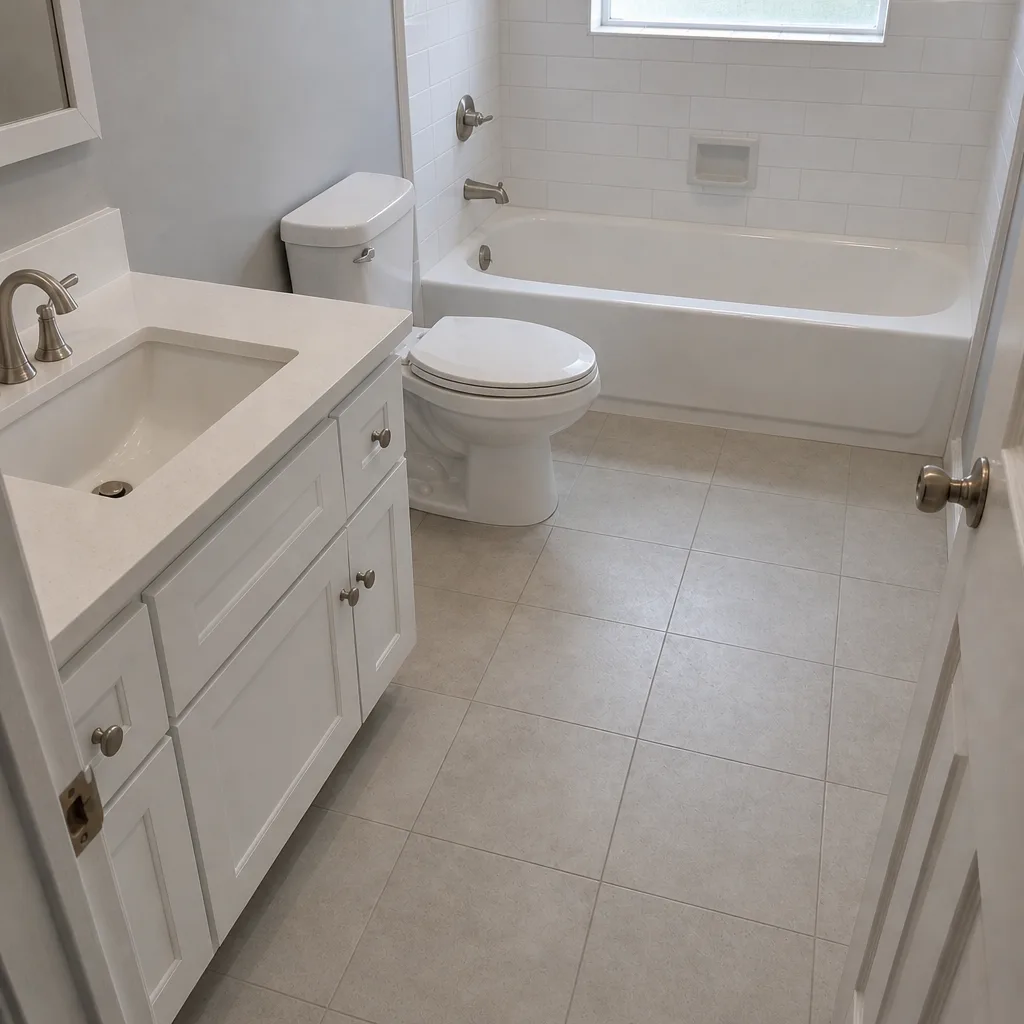
See the difference
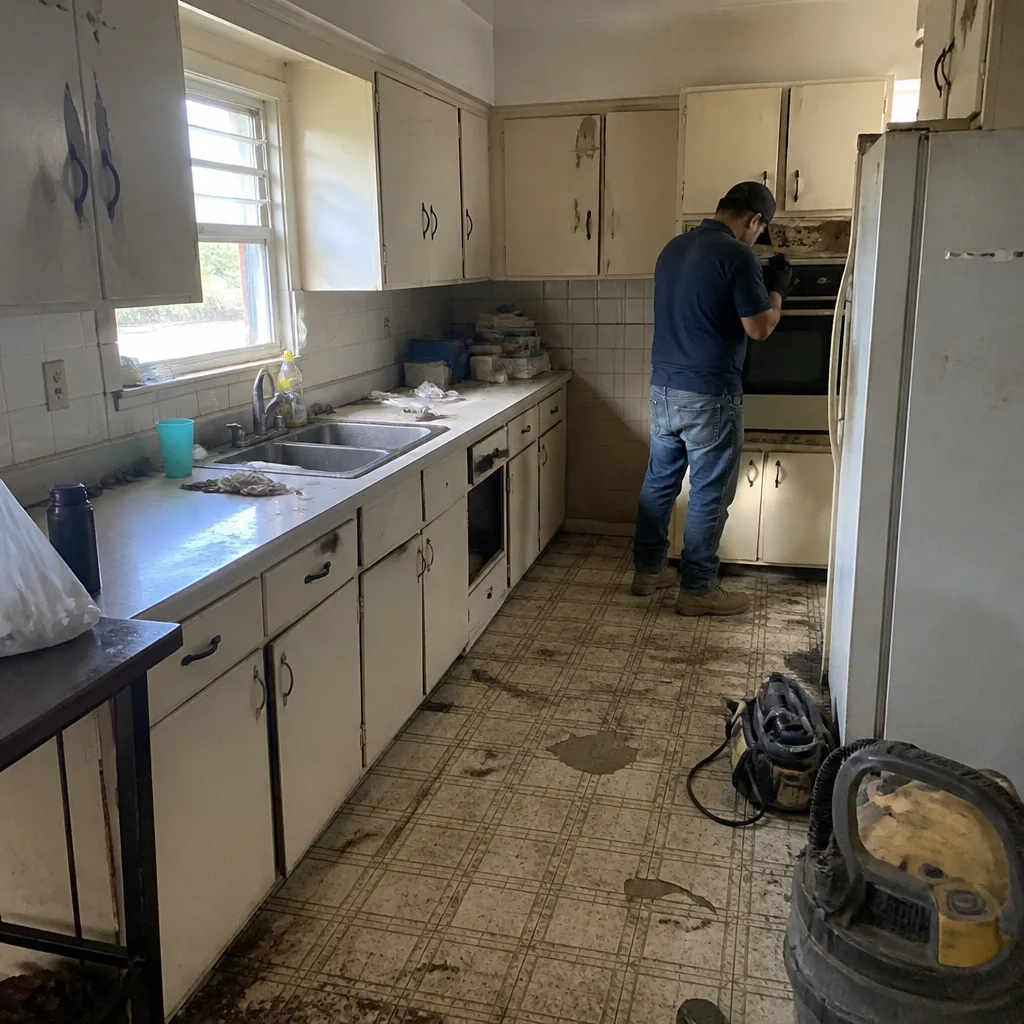 Before
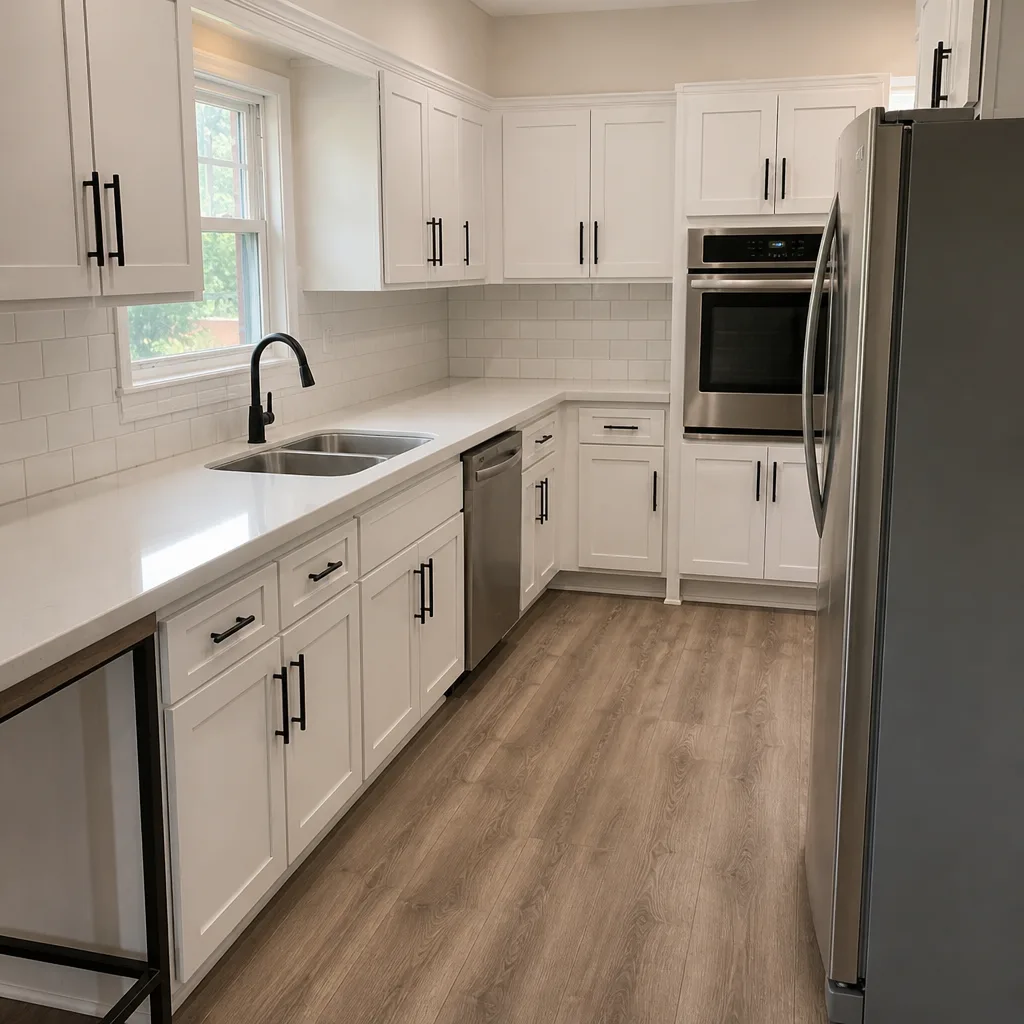 After
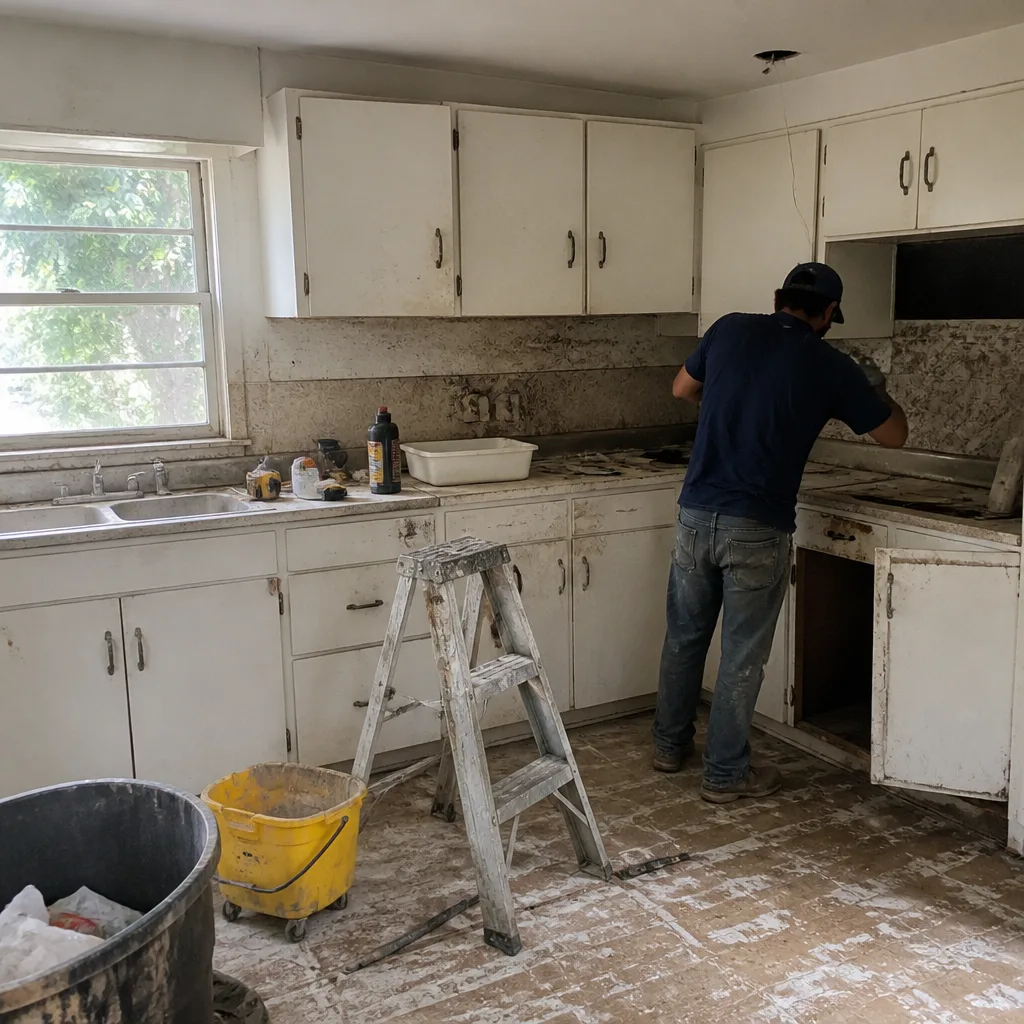 Before
 After
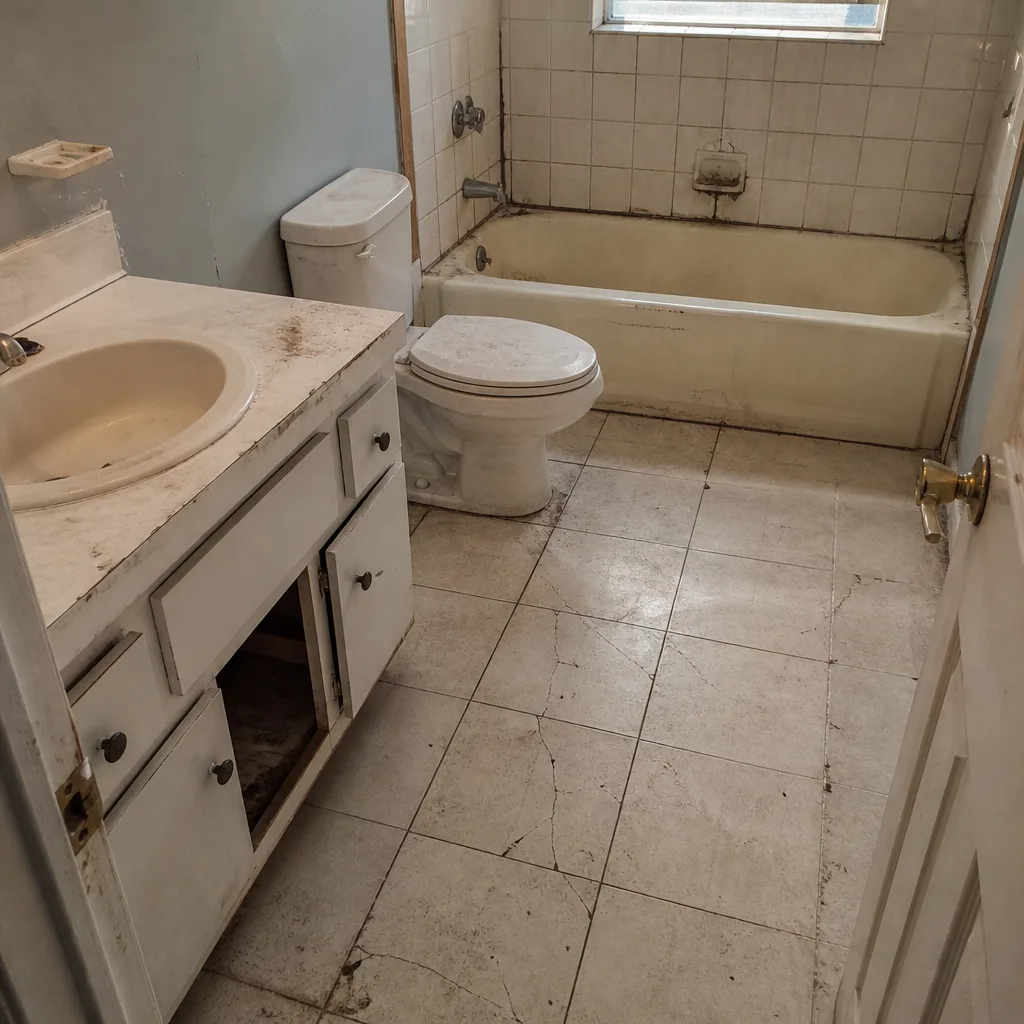 Before
 After
When to Call a Professional
Some situations do not wait for a contractor to return from the next job. Call a professional immediately if you see: sagging ceilings or separation between the ceiling and wall, water intrusion near electrical or gas systems, structural cracks wider than a quarter inch, any damage that required evacuating the home, any roof that has lost more than a small area of shingles or has visible deck compromise, or any fence line or driveway surface that has displaced more than cosmetic amounts. These aren’t “put a tarp on it and hope” problems – they’re structural calls that require licensed trades and documented work.
Groundwork Construction Co. of Westchester offers free estimates in Westchester – call (833) 630-4214. Calls are answered by a live person 24/7, and our technicians are background-checked and arrive in uniform. Every project is backed by the 730-Day Done Right Promise – if it’s not done right, we make it right.
Frequently Asked Questions
Assemble a sealed documentation package before storm season starts: photos of every exterior elevation and room, permit records, policy declaration pages, and three vetted contractor contacts per trade. Homeowners who have this ready start their rebuild within days; homeowners who don’t spend weeks tracking paperwork while damage worsens.
Emergency tarping on a typical Westchester single-family home usually runs $400-$1,200 depending on roof pitch, square footage, and access. Board-up of windows and doors typically runs $200-$600 per opening. Both are usually reimbursable through the “reasonable steps to prevent further damage” clause in most policies – so save your receipts. Call (833) 630-4214 for a precise quote on your home.
You can use your own licensed contractor in Florida. Insurers may recommend a preferred network, but they cannot require you to use it. What they can require is that the work meets code and that the cost is reasonable for the market. A written line-item estimate from a licensed local contractor is the best way to prove “reasonable” – and to make sure the work is done the way you want it done.
Three verification steps: confirm the state license number through the state licensing database, call the insurance carrier listed on the certificate of insurance to confirm the coverage is active, and confirm a physical business address in the county. A legitimate contractor will wait an hour while you do all three. One who pressures you to sign today won’t. Trust the pace of the process over the pitch of the person.
Watch for cash-only deposits, “today-only” pricing, no physical business address, no workers’ compensation insurance, refusal to provide a written contract, and any suggestion to skip the deductible or inflate the claim. South Florida is one of the most targeted regions in the country for these scams. Do not let anyone start work until you’ve completed the three verification steps.
Most policies cover reasonable emergency mitigation because it prevents further damage to the home – which benefits the insurer as much as you. Save the receipts, photograph what you boarded or extracted, and submit those costs as a separate line item from the repair. If your policy has specific mitigation limits, an adjuster will confirm them; call (833) 630-4214 and we’ll help you understand what your estimate covers before you commit.
The Bottom Line
Westchester homeowners who recover fastest from construction emergencies are the ones who planned for them in the calm months. Build the documentation package now. Learn your triage lines – what’s safe to assess, what requires a license, what protects your claim instead of voiding it. Verify every contractor with the license, insurance, and address check before anyone touches your property. Document first, repair second, and follow the insurance sequence that keeps the adjuster honest. Do those things, and a storm becomes an inconvenience instead of a season-long fight. Whatever comes next, we’re here to make the rebuild clean, documented, and built right the first time.
Call Groundwork Construction Co. of Westchester at (833) 630-4214 to schedule your free estimate. Upfront pricing, no surprises. Live person, 24/7. And backed by the 730-Day Done Right Promise from foundation to finish line. Financing options include 0% financing for 18 months and $1,000 off projects over $10,000.
Written by the team at Groundwork Construction Co. of Westchester.